

Access to Education in Latin American Countries: Problems and Solutions
19 March, 2026There is something quietly devastating about a child who wants to go to school and cannot. Not because of indifference, not because of laziness, but because the school is six hours away by foot, or the family needs that child to work, or the classroom has no teacher that week. This is not a hypothetical situation in Latin America. It is Tuesday morning in rural Bolivia.
Researchers who have spent time in the field, not just reading policy papers but actually visiting communities in the Peruvian highlands or the outskirts of Fortaleza, tend to walk away with a different understanding of what “access to education in Latin America” actually means. It is not just about enrollment numbers. It is about what happens between enrollment and graduation, and all the invisible forces pulling students away from that path.
The Numbers Are Real, But They Do Not Tell the Whole Story
UNESCO data from 2022 estimates that roughly 11 million children and adolescents in Latin America and the Caribbean are out of school entirely. The region has made genuine progress since the 1990s. Primary enrollment rates in countries like Brazil and Mexico now exceed 95%. And yet the numbers for secondary school completion drop sharply, particularly in rural areas and among indigenous populations.
A table worth sitting with:
| Country | Primary Enrollment Rate | Secondary Completion Rate | Rural vs Urban Gap |
| Brazil | 97% | 58% | ~22 points |
| Mexico | 98% | 64% | ~18 points |
| Bolivia | 93% | 51% | ~28 points |
| Guatemala | 88% | 38% | ~31 points |
| Colombia | 94% | 55% | ~20 points |
Sources: UNESCO Institute for Statistics, World Bank Education Data 2022.
The gap between primary enrollment and secondary completion is where the real education problems in Latin American countries live. A child might start school. Finishing it is a different question.
What Actually Gets in the Way
The barriers to education in developing countries tend to cluster around a few recurring categories, but the way they interact is underappreciated.
Poverty and child labor remain the most direct disruptors. According to the International Labour Organization, around 8 million children between ages 5 and 17 are engaged in child labor across Latin America. In agricultural households, especially during harvest seasons, school simply loses the competition. This is not a values failure on the part of families. It is a survival calculation.
Geographic isolation is a structural problem that technology has only partially addressed. In the Amazon basin, in the Andes, in parts of Central America, schools exist on paper that do not exist in practice. Teachers are assigned and never arrive. Buildings are constructed and never staffed. The Inter-American Development Bank published a 2021 study noting that in rural Peru, nearly 30% of multigrade schools operated with only one teacher covering all grade levels. One teacher. Every subject. Every age group.
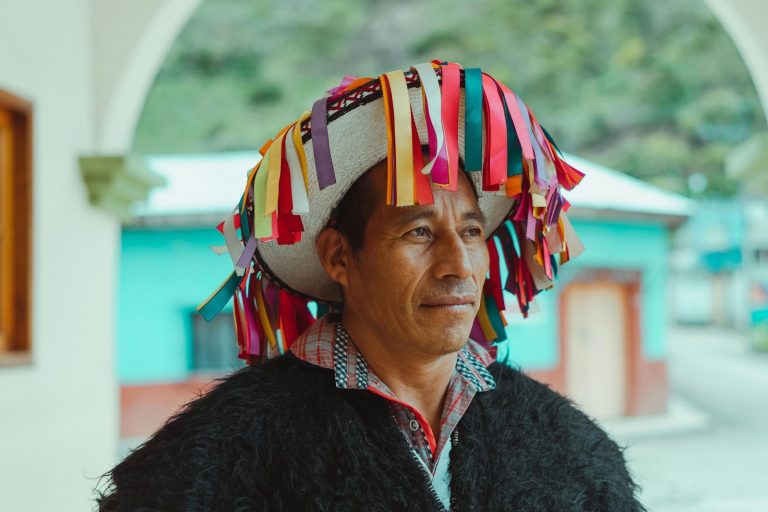
Language and cultural exclusion adds another layer. Latin America has over 800 indigenous languages still in active use. The education system in most countries operates in Spanish or Portuguese exclusively. For a Quechua speaking child in the Bolivian altiplano, school is not just distant, it is linguistically foreign. UNICEF has documented persistent lower attendance and higher dropout rates among indigenous children across the region, a pattern that does not resolve on its own without targeted bilingual education policy.
Gender inequality, while improving in some urban areas, continues to shape access in rural and conservative communities. Girls are pulled out of secondary school at higher rates, often due to early marriage expectations or the assumption that education is a less valuable investment for daughters. In parts of Guatemala and Honduras, this pattern is still measurable and stark.
Students Navigating This System
For students who do manage to stay enrolled and eventually reach university level, the challenges shift but do not disappear. Higher education in Latin America is stratified in ways that mirror the broader inequality of the region. Students from elite families attend well funded private universities. Students from the middle class compete fiercely for spots at federal universities in Brazil or national universities in Argentina. Students from poor and rural backgrounds often do not get that far.
When they do reach higher education, the academic pressure can be overwhelming, particularly for first generation students who have no family precedent for navigating university systems. Resources that provide student essay help have become relevant tools for students who are not failing intellectually but are struggling with the format and expectations of academic writing in a second or third language.
This pressure is compounded by financial strain. Many university students in the region work part time jobs alongside their studies, leaving little time for the kind of deep research that major academic assignments require. The combination of financial stress, unfamiliar academic conventions, and limited institutional support creates a situation where capable students underperform or abandon coursework entirely.
The broader issue here is not about shortcuts. It is about equity. Students who grew up in households with educated parents and access to tutors have always had structural advantages in university settings. Academic support platforms address a real gap that institutions have consistently failed to close on their own.
Students who are already overwhelmed by coursework and financial pressure benefit from the ability to order thesis here rather than spending months alone trying to decode academic conventions they were never formally taught.
Solutions That Have Actually Worked
The good news is that Latin America school dropout rates have responded to targeted interventions. Some of the most credible evidence comes from conditional cash transfer programs.
Brazil’s Bolsa Família program, which provides direct cash payments to low income families on the condition that their children attend school regularly and receive vaccinations, has been studied extensively. Harvard Kennedy School researchers found it contributed to measurable reductions in dropout rates over a decade of implementation. Mexico’s Progresa, later renamed Oportunidades and then Prospera, produced similar findings across rural communities in Oaxaca and Chiapas.
These are not perfect programs. They have faced criticism for bureaucratic inefficiency and inconsistent funding. But they demonstrate that economic incentives tied to school attendance can shift behavior at scale, which is not a small insight.
Community based bilingual education has shown results in Ecuador and Bolivia, where indigenous teacher training programs have improved attendance and comprehension among Quechua and Aymara speaking students. The Bolivian education reform of 1994, despite its eventual erosion, produced peer reviewed evidence that teaching in a child’s home language for the first three years significantly improves long term retention.
Digital infrastructure, when actually deployed rather than just announced, has expanded access in remote areas. The One Laptop Per Child initiative had mixed results, but connectivity programs launched by Colombia’s Ministry of Education in partnership with local telecom providers showed that internet access in rural schools correlates with improved secondary completion rates, provided teachers are trained to use it effectively.
The word “solution” can be misleading. None of these interventions is simple or fast. They require sustained political will, funding that outlasts electoral cycles, and a willingness to admit that education policy must be built around the actual lives of students, not administrative convenience.
What the Region Is Still Getting Wrong
The most stubborn failure across Latin America is treating education quality and education access as separate problems. Governments announce enrollment campaigns, build schools, and declare victory. But a school where children sit in a room with an underqualified teacher and outdated materials is not access in any meaningful sense. It is the appearance of access.
Teacher training and compensation remain underfunded across the region. Bolivia spends approximately 6.3% of GDP on education, which sounds reasonable until you compare teacher salaries with average wages and realize that talented young people have few incentives to enter and stay in the profession.
Argentina, which historically had one of the strongest public education systems in the region, has watched that system erode through years of economic instability. Universidad de Buenos Aires still produces rigorous graduates, but the pipeline from primary school in a poor Buenos Aires suburb to university completion has more leaks than anyone in policy circles is comfortable acknowledging.
First generation university students who do make it through the system often face a steep learning curve when it comes to academic writing standards. KingEssays gives students the ability to buy thesis paper online on KingEssays, working with writers who understand both research methodology and the citation requirements that most underfunded secondary schools never actually taught them.
The Question Underneath the Statistics
At the core of every conversation about solutions to educational inequality Latin America is a question that rarely gets asked directly: who is education being designed for?
Systems that were built to serve urban, Spanish speaking, middle class families will continue to fail everyone outside that profile until they are deliberately redesigned. That is not idealism. That is the straightforward lesson of sixty years of education research in the region. The countries that have made the most durable progress are the ones that stopped trying to fit students into existing systems and started building systems around the students who were not being served.
That shift in thinking is slow. It is politically uncomfortable. It requires budgets and long timelines. But the evidence that it works is sitting there in the data from Ecuador and Brazil and Colombia, waiting for someone to take it seriously at scale.
Follow Sounds and Colours: Facebook / Twitter / Instagram / Mixcloud / Soundcloud / Bandcamp
Subscribe to the Sounds and Colours Newsletter for regular updates, news and competitions bringing the best of Latin American culture direct to your Inbox.