

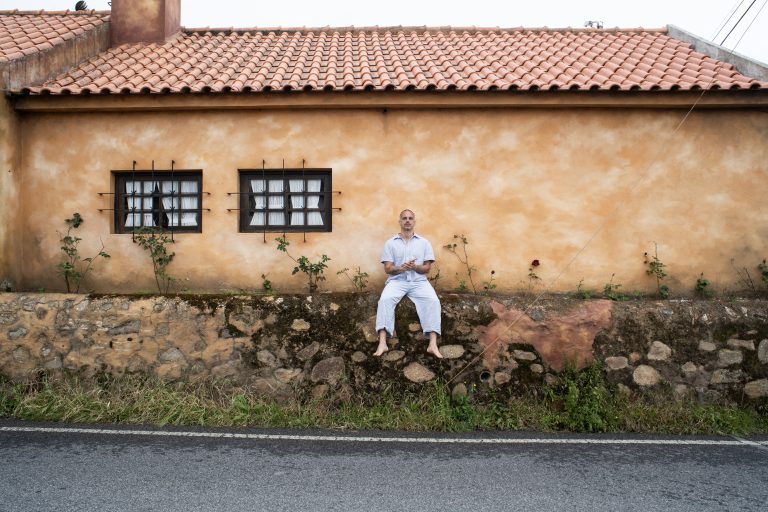
Nunca Tarde – a round-up of recent new albums (DJ Dolores, Jaime Ospina, Natalia Bernal, Julia Mestre, Alvaro Lancellotti and many more)
24 May, 2025It’s difficult to know where to start this month, there are so many fine new releases to tell you about. Perhaps I’ll just close my eyes and let my fickle finger of fate hover over my list…
DJ Dolores: O Enigma do Frevo (Self-released?)
A good place to start, since I haven’t heard much for a while from Helder Aragão, the Brazilian musician, producer, writer and graphic designer we know and revere as DJ Dolores. The man who was a notable figure in the Mangue Beat movement of the 1990s in Recife, the cultural hub of Brazil’s North-East, has turned his attention to the little known genre of frevo. It emerged at the tail-end of the 19th century, a fascinating cultural mix of European and African genres. In particular, the new album focuses on its heyday in the 1930s: brassy pulsating street music in 2/4 time tailor-made for dancing in the way they might at Mardi Gras to New Orleans’ brass bands. DJ Dolores mixes up classical and contemporary tropes to connect tradition and innovation. As with everything he does, the result is both creative and highly rewarding.
Edson Natale and Paulo Brandão: Ruidagem, a garage das sete lembranꞔas (Self-released?)
In terms of innovation, you won’t find anything much more innovative than this project. Is it music? Well, it’s certainly full of colourful sounds. Translating as Noise-Making, the garage of seven memories, the project – a download album and accompanying book – took these two Brazilian musicians and “sound artists” 10 years to complete. They did it by asking friends, families and other collaborators to send them recordings of sounds reflecting ordinary moments yet somehow tied to personal histories. Over a thousand audio files, most captured on mobile phones, poured in from across Brazil and the world. The two sound artists then stitched these fragments of life into a kind of sonic mosaic. It remains to be heard whether the seven pieces they composed together reveal a “hidden poetry of everyday noise” or simply serve as a piece of ephemeral conceptual art.
Jaime Ospina: The Vessel (Self-released?)
However, I have no doubts about this stunning new release from the expatriate Colombian member of the Texas band, Superfónicos. It’s already a strong contender for my album of the year. Ospina himself provides some of the captivating gaita (Colombian flute) playing that blossoms among the Afro-Colombian percussion and the prevalent blend of cumbia, jazz and funk. Recorded live to capture the spirit of collective creation, The Vessel was produced by the celebrated Beto Martinez – and it’s altogether glorious.
Manteca: Ritmo y Sabor (Mr. Bongo)
If it’s percussion you’re after, this Cuban classic from Mr. Bongo is a must. Lázaro Plá, who presumably took his bongolero name from one of Dizzy Gillespie’s signature tunes, was something of a legend on the island, having played with Ernesto Lecuona and the Cuban Boys and featured on many a recording. The album came out in 1978 and convenes Manteca on bongos of course, the great Carlos Patato on congas, Nelson Padres on timbales and Carlos “Rico” Ramirez on bass. You have to be a percussion aficionado to get the most out of this album, almost devoid as it is of any kind of melodic hook, but the strange thing is that if you listen on headphones, you can hear on certain tracks the faint imprint of a full band at play, like a kind of ghost in the machine. Maybe I should consult an ear, nose and throat specialist.
Julia Mestre: Maravilhosamente Bem (Mr. Bongo)
Let’s linger awhile on Mr. Bongo’s Brighton home-turf. Now seems as good a time as any to flag up the Bala Desejo front-woman’s third solo album. It’s a pop-tastic delight that recalls her fellow BD front-woman Dora Morelenbaum’s recent solo release and the music of its co-producer, Ana Frango Elétrico. Mestre in her turn co-produces the nine numbers on this album with glittering brio and vocally handles sultry numbers like “Vampira”, fragile love ballads like “Cariñito” and up-tempo echoes of a distant disco dance-floor in, say, the title track with similar ease. There’s a distinct ambience of ‘80s pop, disco and MPB throughout and it’s all done with the kind of ebullience and sheer joy heard on Bala Desejo’s break-out SIM SIM SIM.
Natalia Bernal: En Diablada (Outside in Music)
Here’s another fine vocalist from South America who does what she does in quite a different style. I’ve been listening to this album now for several weeks and the Chilean world-jazz singer, if that’s the label to employ, has left quite an indelible impression. The child of a Chilean father and a Uruguayan mother, she has been based in New York since 2007 after moving to the U.S. to study music at Berklee College, Boston. For much of this time, she has served as one third of the jazz trio, La Voz de Tres. Although I barely understand a word of Spanish, some of the mystery and magic of the Atacama region she sings of rubs off on the listener – certainly this listener. Her lovely singing voice occasionally strikes a note of Susanna Baca as it weaves around the backing of her classy, sympathetic band. Here they all are live in concert, performing one of the stand-out songs from the album.
Tagua Tagua: RAIO (Wonderwheel Recordings)
I’ve been pushing a couple of singles from the Paulisto, Felipe Puperi or Tagua Tagua, as a prelude to the new album, which has now officially arrived. Coming after 2022’s highly enjoyable Tanto, the nine songs on the new album are sung mainly in Portuguese, nevertheless English creeps in more than before, perhaps in spite of Puperi’s wish for people “to connect with the vibe of the music, even if they don’t understand the lyrics. Melodies… have the potential to help people access other spiritual states and dimensions.” Melody is certainly paramount on RAIO, hitched to a disco or house beat and the kind of warm MPB grooves associated with his “eternal heroes” like Jorge Ben and Tim Maia and “icons of the future” such as Russo Passapusso and (again) Ana Frango Elétrico. He cites the splendid “Artificial” as the album’s centrepiece because it “tied all the creative threads together.” See what you think.
Alvaro Lancellotti: Arruda, Alfazema e Guiné (Amor in Sound)
Another Brazilian singer-songwriter, but by contrast the dozen songs here by this artist based in Portugal don’t fall quite so neatly into a single style or category. Perhaps reflecting the fact that he has collaborated with fellow songwriters like Rogê, Roque Ferreira and his brother Domenico, they range from spare, almost studious numbers like “De Luanda a Aruanda” and “Ando de Bando” to the kind of percussive introspective songs in which someone like Tiganá Santana specialises (e.g. “Abre Caminho”) and richly textured mid-tempo songs like “A Calma” and “Maneira de Ver”. There’s a lot going on and it’s no wonder that David Byrne once selected four of his songs for one of his playlists. This is a beguiling album that will repay multiple listening.
Los Cavilanes de la Costa: Dame Café (Vampisoul)
Time to wander off towards Central America, methinks. Dame Café sounds like it could be an irreverent nickname given to a Costa or Starbucks heiress. I suspect that “Dame” is pronounced “da-may” in Spanish. Corrections please on a postcard… Anyway, Los Cavilanes de la Costa were apparently a short-lived Colombian group that left a certain legacy with the sonideros of Mexico. The album came out originally in 1965 on the Discos Fuentes label and inevitably has become sought-after over time. It’s a chirpy, good-natured affair with some serious chekeré scratching going on throughout the dozen tropical tracks, with accordion melodies and traditional vallenato and cumbia rhythms predominating. I’m rather fond of “Edith” and wonder whether the lead vocalist is singing of Dame Café’s true identity, but I’ll offer you something else that’s representative of the album.
Ray Barretto: Barretto (Craft Recordings)
It’s the 50th anniversary of Ray Barretto’s eponymous album for Fania that introduced his public to the vocal talents of Rubén Blades and Tito Gómez – and Craft Recordings are doing their customary number on the vinyl reissue. According to percussionist, arranger and band leader Bobby Sanabria, 1975 was a pivotal year for salsa in general: “The Latin music industry showed that it could grow commercially while retaining its integrity and progressive new ideas. There is no better example of this tendency than the album known simply as Barretto.” Two years after his best-selling Indestructible, the album marked a kind of personal landmark for Mr. Hard Hands, as he would subsequently divide his time between jazz and salsa while maintaining a role as musical director of the Fania All Stars. Barretto is every bit as classy as you would expect from the hardest-working pair of hands in show business.
El Búho: Cumbias Imaquinarias (Earthly Measures)
Now with added remixes! British-born Robin Perkins is better known as El Búho, the expatriate musician, producer and environmental activist who found his music bliss in South America by electronically re-processing cumbia and other traditional rhythms for the dance-floor. Earthly Measures have just beefed up for vinyl release his EP, Cumbias Imaquinarias, by adding re-mixes by the likes of Lagartijeando and the magnificently named Auntie Flo. Let’s listen to what a favourite maiden aunt has got in her bag of tricks…
Kayatibu: HI NUI – Voices of the Forest (Da Lata Music)
Here’s something that should be right up El Búho’s track through the forest. It’s the fascinating product of three years’ collaboration between young indigenous artists from the Huni Kuin people of Acre – an area of the Brazilian rainforest close to the Peruvian border – with musician and producer Luiz Gabriel Lopes, also known as LUIZGA. It started with an artistic residency as part of an educational project and concluded with LUIZGA being invited back by Kayatibu as artistic director for this album’s recording. Together, they selected the nine songs to “reflect a deep connection with nature and [the Huni Kuin people’s] ancestry.” Here’s the title track to illustrate the kind of mesmerising music on offer.
David Lindes: Peace With a Lion (NPR Music?)
Watching this video to accompany the song “I Should’ve Cried” confirms Super Estrella’s DJ Eduardo Soul’s description of David Lindes’ songs as “hymns for people who are suffering, who need to heal.” In this case, Lindes sings of the pain of leaving his native Guatemala as a nine-year-old. Add to this abandonment as a baby by his father and the physical and emotional abuse he experienced in childhood, and it’s not hard to see this album as a “call-and-answer exchange between suffering and recovering.” The album is sung by Lindes in the kind of confessional, plaintive manner that commentators have rightly spoken of as reminiscent of early Cat Stevens, and producer Alex Cuba speaks of his “huge responsibility to shine a light on David’s beautiful voice and message.”
Johnny Lau: +Yo Que Nunca (Dynamo Productions)
Compare and contrast… Johnny Lau is a Peruvian singer-songwriter based in Mexico who sings about love on his third album in a way that illustrates his own deep love for soul and R&B. His voice and the eight songs on the album are easy on the ear and suggest to me that the R&B influence he talks of is that of the latter-day form typified by the likes of Whitney Houston and Alicia Keyes rather than the earlier version associated with, say, Bobby “Blue” Bland or Wynonie Harris. I can’t help but feel that a little dose of the previous wouldn’t go amiss.
Haroldo Bontempo: Voz e Violão (YB Music/Alternet Music)
And finally… it’s another singer-songwriter, this time our old friend Haroldo Bontempo. He’s just released his first live recording, simply voice and guitar captured at Estúdio Central in Belo Horizonte under the sonic direction of his band-mate in Mineiros da Lua, Elias Sadala. Apparently, the recording uses ribbon microphone techniques to create “a nostalgic and unconventional sound”. You can see whether it worked or not here on this version of a song co-written with Minas Gerais poet and writer, Amélia Machado.
Happy listening and a warm fin de springtime.
Cover photograph of Alvaro Lancellotti by Daryan Dornelles.
Follow Sounds and Colours: Facebook / Twitter / Instagram / Mixcloud / Soundcloud / Bandcamp
Subscribe to the Sounds and Colours Newsletter for regular updates, news and competitions bringing the best of Latin American culture direct to your Inbox.