

Nunca Tarde – a round-up of recent new albums (Mauricio Fleury, Belinda Guerra, Gabriele Leite, Money Chicha, Carlos Garnett, La Cumbia Chicharra and many more)
13 December, 2025Welcome to the last round-up this year. Without further ado, may I draw your attention to the following crop of new sounds…
Mauricio Fleury: Revoada (Altercat Records)
In the face of so much global gloom and doom, let’s start with a little good news: Altercat Records, the boutique label of Berlin specialising in all things South American, are back on our radar after everything went rather quiet for a year or so. They’re back with a bang, too, in the form of this brief but rather fine debut from the multi-instrumentalist, composer, vinyl collector and DJ, and former founding member of São Paulo’s Bixiga 70 behemoth. Fleury himself states that the record is “about where I wanted to go without ever leaving my house.” True enough that it could have been recorded at home on his battery of keyboards and effects, but it’s likely born of his searches through flea markets and the like for old records and other vintage cultural artefacts. The vibe is redolent of the 1970s, with shades of Azymuth, Deodato and producer Creed Taylor’s signature CTI Records sound. A splendid way to start things off.
Quarto Em Cy: Quarto Em Cy (Vampisoul)
Perhaps Quarto Em Cy were one of those Brazilian combos of the time that, consciously or unconsciously, Fleury would have referenced on Revoada. The all-female quartet were known for their intricate vocal harmonies and their roots in bossa nova, but on this 1972 release they venture more into MPB territory with the support of (sumptuous string) arrangements by Edu Lobo and Luiz Eꞔa of Timba Trio. My personal highlight is definitely their atmospheric take on Milton Nascimento’s “Tudo Que Você Podia Ser”. It’s elegant stuff that smacks of an age when the Mamas & the Papas and The Fifth Dimension were vocally making hay in the sunshine.
Belinda Guerra y Su Cuban Jazz Ensemble: Bebop Havana (Tumi Music)
As we dawdle in the distant past, it might be appropriate to focus on this debut release from a new Cuban ensemble, if only for its retro title and a passing resemblance at times to Irakere in their prime. In fact, the eight numbers are more about son, danzon and Latin jazz in general than Bird-like bebop (as the title implies). The leader’s distinguished flute-playing is very much the principal “voice” on an album whose range and variety, arrangements and tight-knit soloing all point to a very bright future for this young Cuban jazz ensemble.
Omar Sosa: Sendas (OTA Records)
While on the subject of Cuba, the peripatetic pianist known for his trans-global collaborations released a solo album last month, digitally for now and presumably prior to a physical release later on. I haven’t had a chance to listen to it in full, but this long, hypnotic track sounds in keeping with the kind of dreamy music that we come to expect from Omar Sosa. “Music became our shared voice,” he writes, “a vessel into which we poured our collective anguish, and in so doing, despair became a beacon of light.”
Gabriele Leite: Gunûncho (Rocinante)
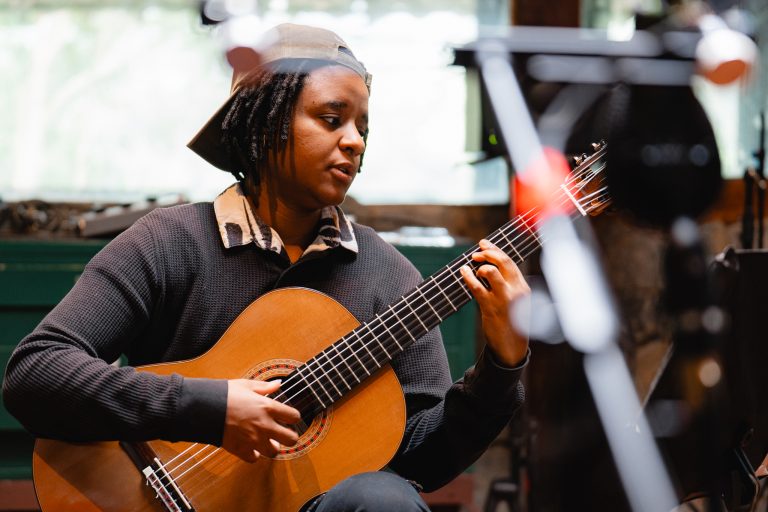
This one sits rather sympathetically with the Omar Sosa release. Solo guitar follows solo piano. The 28-year-old virtuoso from São Paulo salutes female composers in her follow-up to Territórios in the form of 16 brief-ish études, I guess you might call them. The longest is just over four minutes, the shortest half a minute. “Celebrating women composers broadens the listening of the repertoire,” she contends. Perhaps so, but it wouldn’t really matter what this spellbinding young guitarist plays, such is her technical grasp of the instrument.
Alex Cuba: ĺndole (Blue Note)
The Cuban singer-songwriter based in Canada is no mean exponent of the acoustic guitar, but more in support of his voice and his songs. He seems to exude joy and positivity even when he’s embracing sorrow as a creative force – as he does on his latest (11th!) offering. After so many albums, I guess he’s earned what he calls “absolute creative control”. “It’s fascinating to feel that you can go to the studio, record everything yourself, and do it until it sounds exactly as you want.” In so doing, he appears to have given his fans exactly what they want with these dozen well-tempered, good-natured tracks.
Zemog El Gallo Bueno: ¡Ya Tú Sabes! You Already Know (Pinch Records)
Confession time: I’m re-publishing this latest round-up because I realised that somehow I managed to forget this one. It’s like forgetting to brush your teeth of a morning, symptomatic of a worrying cerebral decline. Anyway… the 7th album by the nine-piece “Latin X-Perimental” outfit led by Abraham Gomez-Delgado is well worth the long wait since its 2018 predecessor. Gomez-Delgado describes how he approached the new album in a way similar to Miles Davis’ creation of his masterpiece, Kind Of Blue. By letting the musicians improvise freely around the sketches he gave them initially, it became like a process of “composing backwards”. “That’s the beauty of playing together for so long – the circle of improvisation leading to composition, and composition leading back to improvisation.” It’s a creatively challenging if risky process and some of the dozen resulting numbers – sung in Spanish, English and Spanglish, and based around themes of immigration, ancestry and personal transformation – work better than others, but this is a classy album that’s all the better for daring to be a little different.
Money Chicha: Onda Esotérica (Vampisoul)
November was a good month for the dependable Madrid label. Quite apart from the usual clutch of welcome reissues, there was this brand new release from the Austin-based purveyors of Cumbia Amazónica. Featuring members of the Grammy-winning Grupo Fantasma and Brownout, Money Chicha are a force to be reckoned with. Their third album is an absolute belter. As KUTX puts it, “It’s the kind of music that rewires your brain, awakens your spirit animal, and takes you places you’ve never been.” Try listening to this one after a few hits of tequila and see what your neighbours have to say on the matter.
Carlos Garnett: Cosmos Nucleus (Time Traveler Recordings)
It’s not every month that we shine the spotlight on a Panamanian saxophonist, let alone two of them. Carlos Garnett was not a heavyweight in terms of the tenor sax’s pantheon, but he did play for a time with Art Blakey and Miles Davis among others. Time Traveler has launched an ambitious programme of reissues from the esteemed Muse Records catalogue and this one dates back to 1976. I must have had a head full of cares and distractions when I first listened to this, because I dismissed it as run-of-the-mill 1970s jazz-funk. In fact, it’s anything but. For a start, it was made with a really big band, with an 18-piece horn section, which could have overwhelmed the music and Garnett’s own playing (and very occasional singing, as on this track). It didn’t; instead, adding colour and resonance to all six long, explorative numbers that demand repeated (clear-headed) listens.
David Cultura: Cultura (Create Records)
Here’s the other Panamanian saxophonist I spoke of, this one from current times. The seven numbers represent Cultura’s initial release. He grew up in Panama City, where he learnt saxophone, guitar, flute and percussion initially under the tutelage of his father. On moving to the U.S.A., he eventually settled in St. Louis, where he has performed with various bands. “I wanted to make an album that was centred around melody,” he asserts. “I wanted it to be a jazz record that was accessible, that brought people into the music.” Here’s the second track, so you can gauge whether you think he succeeded. Me, I like the music, but I won’t be booking a trip to Panama City in a hurry .
Westbound Train: Sing The Ghost Away (Org Music)
“I guess sometimes you just have to sing the ghost away,” as the opening words of this album by the Boston-based ska and soul collective suggest. Musically speaking, this album is just fine, but I don’t know… it seems kind of weird to hear someone sing about meeting at the Metro or sunsets over water to an authentically jaunty ska backing. I’m sure that if I were listening to Westbound Train live in a steamy club, I’d be skanking vigorously with a blissful grin on my face like the rest of them. As I say, the music tracks are exemplary, and the lead vocalist, too, has the right kind of righteous timbre for the job.
Iuna Falcão: Umami (Atabaque Biz)
Something else now from the Jamaican diaspora, this time courtesy of the cultural roots of São Luís do Maranhão, Brazil’s “emblematic capital of reggae”. The singer was born here before later moving to Salvador to study Visual Arts at the Federal University of Bahia. She released her debut EP in 2022 and an acclaimed album, Transe, the following year. Her sophomore release is built on deep basslines, hypnotic grooves and her warm colourful vocals that occasionally recall Amy Winehouse. She collaborates with the likes of the estimable Jadsa Castro and the delightful Cape Verdean artist, Mayra Andrade, and altogether it’s as rich and fruity as a satisfying cup of coffee.
La Cumbia Chicharra: Quinto Mundo (Music Box Publishing)
The fifth album from the Franco-Chilean stalwarts of the Marseille Latin scene is as good if not better than anything they have brought out up to now. Which is praise indeed. The nine new numbers together reinforce Rock & Folk’s verdict of an “irresistible groove” that incorporates elements of Colombian, West African, Jamaican and even Ethiopian indigenous music. It’s a confident multi-coloured album and I only wish that they’d come up this way and play for the beleaguered, dance-deprived citizens of la France profonde.
Carlos Malta, Robertinho Silva & Francisco Pellegrini: Tanajura (self-released)
On a rather more sedate and poetic level comes this collaboration between three generations of Brazilian music-masters: Robertinho Silva on a range of percussion instruments, Carlos Malta on flute and Francisco Pellegrini on piano and accordion. The music was performed without either scores or rehearsals, giving a lovely spontaneous feel to the proceedings. Sometimes light and airy, sometimes elegiac in tone, it’s altogether a lovely three-way instrumental conversation that has been out since (whisper it) May, but either has just been or is soon to be made available for streaming on Bandcamp.
Eduardo Araújo & Silvinha: Sou Filho Dêsse Chão (Mr. Bongo)
Before we leave Brazil, here’s one last offering to consider. It came out in late October, so again I’ve been slow on the uptake. The two singers had successful careers dating back to the ‘60s and released this underground landmark in 1976 with its psychedelic cover and its melange of rock, MPB, Tropicália and the more traditional music of northern Brazil. The funk of “O Tempo Que Esse Temp Tem” is very reminiscent of Tim Maia’s music of that time, while the spacey “Opanigê” lived on in the sample Madlib used for his track “São Paulo”. Although I’m more comfortable with the tracks featuring Dominguinhos’ accordion, it’s an historically important album that sheds some intriguing light on the Brazilian music scene of that epoch.
Twanguero: Christmas with el Twanguero (Altafonte)
And so we come at last to the inevitable Christmas album. I hear you ask, what have numbers like “Jingle Bell Rock” and “Wonderful Christmas Time” – even if recorded by the Spanish guitarist Diego Garcia, known to his mates as Twanguero, on analogue tape using a vintage RCA 44BX microphone – what have they got to do with a Latin music site in the name of Santa? Well, if I were to tell you that this noble project supports El Patojismo, a school of arts and social transformation based in Jocotenango, Guatemala, would that make you feel more favourably inclined? I know that my daughter’s going to love it. Christmas to her is synonymous with such albums. Roll over Phil Spector, take Twanguero’s Yuletide licks.
Just a little taste of “Jingle Bells” there from Señor Twanguero and his beautiful Gibson guitar. I’m sure you’ll all be singing the full unexpurgated version in the weeks ahead. Don’t overdo it and remember that a dog is for life and not just for Christmas. Daphne says “woof woof” and joins me in sending some hearty festive cheer.
(Cover photo of Gabriele Leite by Lucca Mezzacappa)
Follow Sounds and Colours: Facebook / Twitter / Instagram / Mixcloud / Soundcloud / Bandcamp
Subscribe to the Sounds and Colours Newsletter for regular updates, news and competitions bringing the best of Latin American culture direct to your Inbox.