

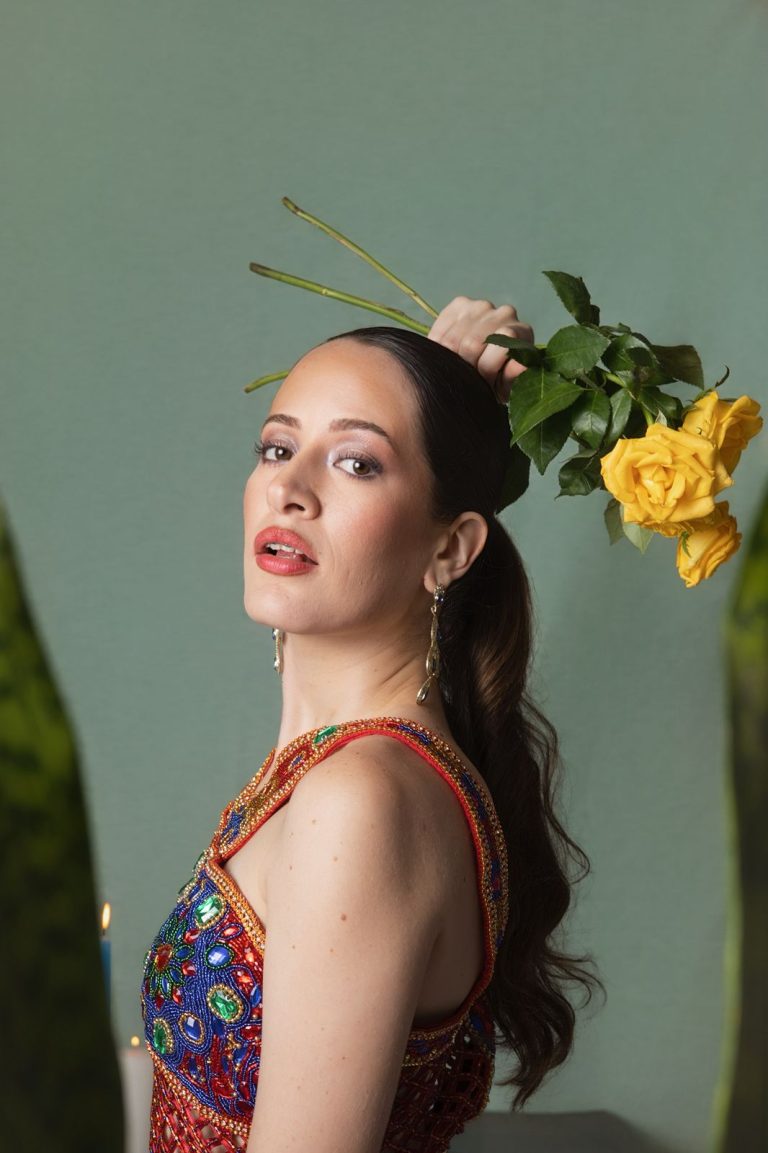
Vitória do Pife: Sem Pergaminho – Living Tradition from Brazil’s Northeast
11 December, 2025Vitória do Pife emerges as one of the most compelling voices in Brazil’s new generation of traditional musicians. Based in Caruaru, in Pernambuco, she is a disciple of Mestre João do Pife, who is recognized as a Living Heritage treasure. Mestre João has dedicated over seven decades to preserving the pífano musical tradition, performing all over the country and internationally and crafting the instruments in his workshop.
The pífano (or pife) is a rustic transverse flute carved from bamboo, central to one of Brazil’s most distinct yet globally under-recognized folk traditions. Pífano bands have long been part of Northeastern spiritual and communal life, accompanying penitential processions, reisados, indigenous rituals, folkloric Catholic celebrations, and rural gatherings. Their music is protective, celebratory, and often healing—a social memory of the backlands carried by wind instruments that sound as ancient as the Caatinga itself.
Released in December 2025, Sem Pergaminho (Self-released) is Vitória’s debut album, featuring 14 original tracks that explore both the tradition and modernity of the pífano. The album title itself declares her philosophy: in her village, there are no parchment scrolls—knowledge is not written but lived, learned through walking, observing nature, and spiritual practice.
The album leans into the cyclical trance that defines Northeastern folk ensembles. The “swingados” (swinging) arrangements are co-directed by Gabriel Bezerra and Vitória herself. The band features Wallisson Santana on bass, Wagner Santos and Danilo Felipe on percussion and drums, and Valdemar Neto on guitar and seven-string violão. Notable guest appearances include Siba, Mestre Anderson Miguel, Renata Rosa, Rosberg Adonay, Bella Kahun, and Banda de Pífanos Caruaru Camaleão.
Sem Pergaminho forms a kind of musical cosmogram—a journey through Brazil’s Northeast, exploring Indigenous cosmology, Jurema rituals, caboclo spirits, travelling musicians, boi-bumbá lore, and the everyday philosophy of people who learn from nature rather than books.
Key tracks
“Curupira” – The album opens with a ritual interlude featuring Rosberg Adonay, another rising star from Caruaru. In the regional religions of Catimbó and Jurema, the pife is not just music but the breath of the world being created.
“Sem Pergaminho” (title track) – Knowledge comes through walking “pelos cantos” (through the corners), through trial and error. Vitória’s “science” is not Western laboratory science but the science of Jurema, of the forest, of healing and spirits—the Indigenous tradition of plant-based wisdom blended with Afro-Brazilian spiritual guides.
“Caboclo Pererê” – A celebration of indigenous spirits Pererê and Jarará—mischievous, forest-connected, shape-shifting beings common in Jurema and Umbanda. The hypnotic repetitions echo how ritual chants build collective energy, with the pife solo suggesting a spirit taking flight.
“Girar, ô Girar” – A meditation on ego, exhaustion, and spiritual sobriety, where the singer turns to her “Santo forte” (strong saint) rather than seeking solace in alcohol—the mystical sobriety of Jurema.
Critics call Vitória’s voice penetrating, pitch-perfect and razor-sharp — and the descriptions feel almost insufficient. The connection between the voice and the pife is like a continuum. She moves through phrases the way a pife melody threads through wind. Stylistically, listeners may hear echoes of Comadre Florzinha or Karina Buhr in the fiery, corporeal delivery, but Vitória herself locates her lineage elsewhere. She cites Juçara Marçal and Kiko Dinucci as her more direct influences — particularly the raw vocal-spirituality of Padê, the fractured sacredness of Metá Metá, and the Afro-Brazilian textures of Goma-Laca: Afrobrasilidades em 78 RPM, with its roster of artists like Russo Passapusso, Lucas Santtana, and yes, Karina Buhr.
The album is deeply rooted in the local religions such as Catimbó and Jurema Sagrada, where each tree has axé (spiritual energy), and each pife song opens a vibratory corridor. This is the pure Jurema cabocla worldview: Indigenous plant-based wisdom blended with Afro-Brazilian notions of spiritual guides and protection through undoing envy, curses, and the evil eye. Sem Pergaminho is pure Catimbó-Jurema poetry, set to pife, maraca, ilú and atabaques.
Listen to Sem Pergaminho – on all the streaming platforms, including YouTube Music
Follow Sounds and Colours: Facebook / Twitter / Instagram / Mixcloud / Soundcloud / Bandcamp
Subscribe to the Sounds and Colours Newsletter for regular updates, news and competitions bringing the best of Latin American culture direct to your Inbox.