

1 February 2026 and two key wins for video game music
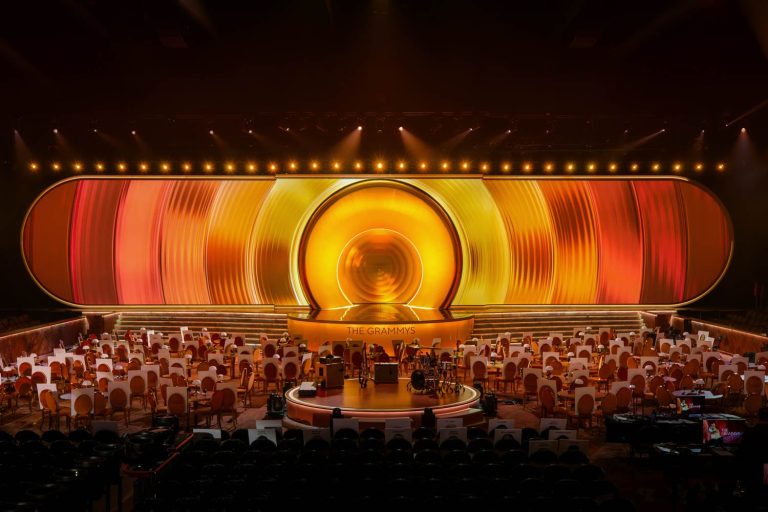
25 February, 2026The 2026 Grammy Awards ceremony took place on the evening of 1 February in Los Angeles, and a significant share of the attention this time went to video game music. The awards recognized both arrangements of already well-known themes and original works for interactive formats in which the music changes in response to the player’s actions.
Two outcomes in particular became the main reference points in this conversation. In the category Best Arrangement, Instrumental or A Cappella, the winning arrangement was Super Mario Praise Break, and in the category Best Compilation Soundtrack for Video Games and Other Interactive Media, the award went to the Sword of the Sea soundtrack, written by Austin Wintory.
The jazz orchestra 8 Bit Big Band won a Grammy for Super Mario Praise Break
The New York–based ensemble 8 Bit Big Band won in the arrangement category. It is a large jazz orchestra with more than 30 musicians, and its profile can be described as a concert reimagining of video game classics through the language of big band jazz, where section timbres, improvisational logic, and precise rhythmic work matter.
This wasn’t the Recording Academy’s first encounter with the group. Previously, 8 Bit Big Band had already won in the same category in 2022 with Meta Knight’s Revenge, and last year they received a nomination for the cover Last Surprise, thereby cementing a reputation as an ensemble that consistently brings video game music into an institutionally recognized context for arrangement.
Their recent milestones are as follows:
- 2022 and a win for Meta Knight’s Revenge based on Kirby Super Star
- 2025 and a nomination for Last Surprise, a cover of a theme from Persona 5
Super Mario Praise Break is structured as a medley—a potpourri of several themes combined into one cohesive piece. The concept relies on the recognizability of the originals and on how these melodies are experienced outside the game, when rather than serving as background music they become the main material of a concert, with development, contrasts, and a dramatic arc.
The medley is built on themes from different entries in Nintendo’s flagship series, and in the arrangement they flow into one another in sequence, shifting tempo and texture. The program included the following melodies, grouped by game and theme:
- Super Mario Bros. and the main theme Super Mario Bros. theme
- Super Mario 64 and Bob Omb Battlefield
- Super Mario Galaxy and Gusty Garden Galaxy
- Super Mario World and Athletic Theme
After the announcement, the musicians reacted with a short message on X, writing in all caps “WE JUST WON OUR 2nd GRAMMY!”. In the same post, the group thanked listeners, as well as co-creators and collaborators on the release Bryan Carter and Matthew Whitaker.
Austin Wintory received the award for the Sword of the Sea soundtrack
In the second major category for the industry, Best Compilation Soundtrack for Video Games and Other Interactive Media, composer Austin Wintory won for his music for Sword of the Sea. This category specifically highlights soundtracks for video games and other interactive works, where the recording is judged as a cohesive whole rather than as an individual theme or song.
Wintory has long been in the Grammys’ orbit as a nominee, and his name regularly comes up in conversations about how video game music is approaching repertoire status rather than being only applied accompaniment. Among the works previously mentioned in the Grammy context, Journey, Stray Gods, and Aliens: Fireteam Elite are most often cited, with Journey remaining the most recognizable touchstone of his career, a kind of starting point for public discussion of the genre.
The story of Journey is also important for procedural reasons. This work was recognized and discussed during a period when there was not yet a dedicated category for video games at the Grammys; it was introduced only in 2023. This chronological mismatch shows that recognition of video game music developed not in a single leap, but through an accumulation of precedents, although the details of how exactly the Academy compares interactive soundtracks with other recording formats still remain described only in broad terms.
The professional community’s reaction to Sword of the Sea was voiced publicly and in different ways. Composer Darren Korb, known for Hades II, noted that he especially connects with the moments when Wintory’s music evokes Björk for him, and called these some of his favorite passages in Wintory’s work. Separately, composer Borislav Slavov, who worked on Baldur’s Gate III, emphasized the score’s emotional range and how it retains expressiveness while remaining flexible for interactive gameplay, where the order of events and the length of scenes can change.
Previously, this category was won by Stephanie Economou, Gordy Haab, Stephen Barton, and Winifred Phillips. The list itself shows that the awards are gradually forming a canon of names, but it is still difficult to judge clear stylistic preferences from it, since different schools and approaches to game music end up side by side.
Video game music is becoming increasingly prominent at the Grammys
Two wins in one evening were telling precisely because of the diversity of forms. In one case, an arrangement was recognized, where the source themes have existed for a long time and gain new life through jazz orchestration and concert dramaturgy. In the other case, the award went to an original soundtrack that must work within the logic of interactivity without losing cohesion and a distinct artistic identity.
This is only natural, because music in games today plays an increasingly important role. Over time, the trend has also begun to spread to the iGaming sector, which is especially noticeable in new projects. We decided to verify this and looked at titles popular on the market.
As an example, we decided to consider crash games such as Aviatrix, Lucky Jet, Aviator, JetX, since in them a unique mechanic sits alongside an updated approach to musical accompaniment. For instance, jetx game apps use electronic music—a blend of up-tempo electronic pop, synthwave, and techno.
The result is a distinctive, instantly recognizable soundtrack that is fully driven by the mechanics. The game’s musical accompaniment is aimed at heightening emotional engagement. At the same time, JetX does not have an official standalone soundtrack (as an album on streaming platforms). In this respect, the iGaming industry is a few steps behind the traditional video game industry, where music can be considered not only as part of the game, but also as a separate element.
At the industry level, this reflects a shift in how music from games is evaluated. It is increasingly considered alongside other kinds of recorded and interactive music not as a novelty, but as a fully fledged field, where both the craft of the orchestrator and the composer’s authorial language matter, as well as the ability of a recording to stand on its own beyond the screen, without replacing the experience of the game—or dissolving into it.
Follow Sounds and Colours: Facebook / Twitter / Instagram / Mixcloud / Soundcloud / Bandcamp
Subscribe to the Sounds and Colours Newsletter for regular updates, news and competitions bringing the best of Latin American culture direct to your Inbox.