

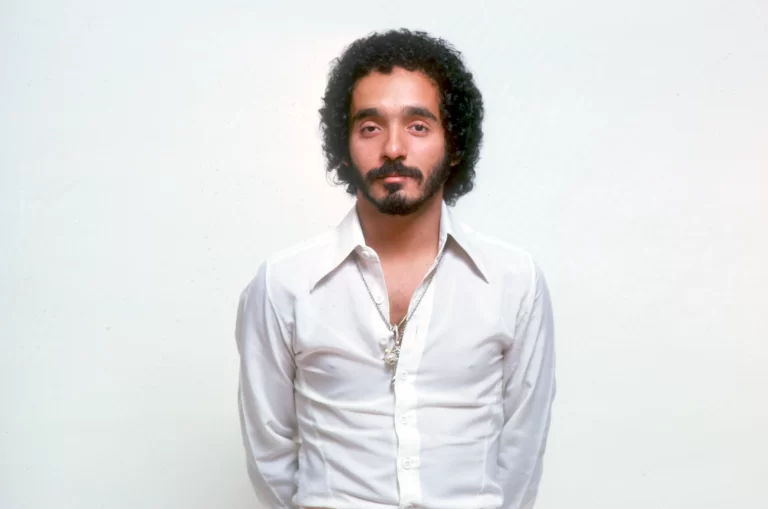
R.I.P. Willie Colón
26 February, 2026Good grief, they’re dropping like flies: Eddie Palmieri, Hermeto Pascoal, Willie Colón and more. Giants all.
William Anthony Colón Román died a few days ago, just shy of his 76th birthday. These days, that doesn’t seem particularly old, but he certainly made the most of his time. He was just 17 when his debut, El Malo, came out and he would go on to sell over 30 million albums and win 11 combined GRAMMY and Latin GRAMMY awards, as well as a Lifetime Achievement award from the Latin Recording Academy. By the time of his induction into the Latin Music Hall of Fame in 2000, the moustachioed singer, trombonist, political activist and public servant for the Latin community of New York was already a legend.
My own introduction to the musician came during the few years when I worked in central London during the mid ’80s. My friend and colleague, Pedro, a Trinidadian steel pan player and arranger, would spend our lunch breaks rifling through the shelves of Cheapo Cheapo Records in Rupert Street, Soho, an Aladdin’s Cave full of LPs and cassettes, whose irascible proprietor would have won a Lifetime Achievement award for Rudeness-behind-a-counter. I found a copy on cassette of Willie Colón and the Legal Aliens’ Top Secret. It’s not one of his most celebrated releases, there are no big names in the Legal Aliens and it’s on the Messidor label rather than his home-from-home, Fania. He doesn’t even play trombone on it, but it does feature his warm vocals and I still love it. In those days, I hadn’t learnt my Spanish accents and would pronounce his name like external and internal human organs, which would make my friends and me snigger like adolescents.
Over the years, I’ve learnt to put the stress on the second rather than the first “o” and have picked up more of his albums, mainly on CD and mainly on Fania. In the last couple of years, Craft Latino have re-released some of his back catalogue, including the recent Guisando and the truly splendid The Big Break – La Gran Fuga, styled as a WANTED poster to give it genuinely iconic proportions. The mugshot of the leader on the cover makes him look like the disaffected son of Puerto Rican parents from a tough neighbourhood in the South Bronx. His band of brothers “wanted by the dancing public” included Milton Cardona on congas, “Professor Joe” Torres on piano and, almost inevitably, “one, HECTOR LAVOE, occupation ‘singer’, also a very dangerous man with his voice.”

“Willie Colon and Hector LaVoe [were] known to kill people with little provocation with their exciting rhythm without a moment’s notice,” the cover suggests. Certainly, Colón was a serial collaborator: not only with the legendary (self-destructive) vocalist, but also with Rubén Blades, Celia Cruz, Ismael Miranda and David Byrne, not to mention his label-mates in the Fania All Stars, including fellow trombonist, Barry Rogers. Willie Colón’s instrumental style may have lacked some of the technique and subtlety of the sideman-par-excellence, but he certainly made up for it in sheer rambunctious rowdiness.
So what can one say really about this true Latin immortal that hasn’t already been said? Bruce McIntosh of Craft Recordings put it nicely: “His legacy is etched into the very soul of Latin culture. He will forever be ‘El Maestro.’” And, to return to that cover of The Big Break, “If anyone knows the whereabouts of Willie Colon and his gang do not notify us. Go immediately to where they are and enjoy yourself.” Alas, I guess, we know where “El Malo” is now, but we—and future generations—are lucky enough to have all that great music still to enjoy.
Follow Sounds and Colours: Facebook / Twitter / Instagram / Mixcloud / Soundcloud / Bandcamp
Subscribe to the Sounds and Colours Newsletter for regular updates, news and competitions bringing the best of Latin American culture direct to your Inbox.