


How U.S. Vape Culture Is Reshaping the Way Latin Americans Consume Sativa?
15 April, 2026
There is a cultural shift happening across Latin America’s cannabis scene, and it is moving faster than most people expected. In the barrios of Bogotá, the creative studios of São Paulo, the rooftop bars of Mexico City, and the beachside communities of Buenos Aires, a new consumption format is quietly displacing the hand-rolled joint as the go-to way to experience sativa cannabis. That format is the vape cart. And the blueprint for it came from the United States.
This is not simply a story about a product crossing a border. It is a story about how a mature, innovation-driven market is fundamentally changing the expectations, habits, and standards of a younger one. U.S. vape culture — built on lab testing, hardware engineering, strain specificity, and consumer education — is arriving in Latin America through social media, cross-border travel, and diaspora communities. And Latin American sativa consumers, who have one of the richest strain heritages on earth, are receiving it with more enthusiasm than almost anyone anticipated.
At the center of that influence is a new generation of U.S. brands setting standards that Latin American consumers are beginning to measure everything else against. TribeTokes is chief among them.
What Latin America Had Before the Vape Cart?
For generations, the hand-rolled joint was the uncontested format for cannabis consumption across Latin America. It was affordable, deeply social, and embedded in the cultural rituals of musicians, artists, and activists from Havana to Santiago. Latin America’s indigenous sativa genetics — Colombian Gold, Punto Rojo, Santa Marta Gold — produced long, cerebral, energetic highs built for conversation, music, and connection.
The problem was never the genetics. The problem was everything around them.
The informal cannabis market that dominated Latin America for decades operated with essentially zero quality control. Consumers had no way of knowing the strain, the potency, the terpene profile, or whether the product had been treated with pesticides or cut with synthetic cannabinoids. A bag labeled “Colombian sativa” could contain almost anything.
For the growing segment of Latin American users who were becoming more educated and health-conscious — heavily influenced by what they were seeing from legal U.S. markets — that uncertainty became increasingly unacceptable. That educated, quality-conscious consumer was the exact person U.S. vape culture was built for. When those two forces met, the shift began.
What U.S. Vape Culture Actually Brought
The COA as a trust standard
In mature U.S. cannabis markets, the Certificate of Analysis — the third-party lab document confirming cannabinoid potency, terpene profile, pesticide screening, and residual solvent results — became a baseline consumer expectation rather than a premium feature.
When Latin American consumers encountered U.S. brands publishing these documents openly on their websites, it registered as something genuinely radical. The idea that you could verify the limonene content of your sativa cart, confirm the absence of pesticides, and check the THC percentage against the label represented a fundamentally different relationship between consumer and product. Latin American consumers who discovered COA culture began applying that standard to every product they had ever bought without it. The informal market’s opacity went from a regrettable reality to an active disqualifier.
Terpene science and strain specificity
One of the most significant cultural exports of U.S. vape culture has been the language of terpene science. Before this education wave, most Latin American sativa consumers thought in binary terms — sativa gets you up, indica brings you down. After it, a growing segment began thinking in terms of terpene profiles, entourage effects, and strain-specific experiences.
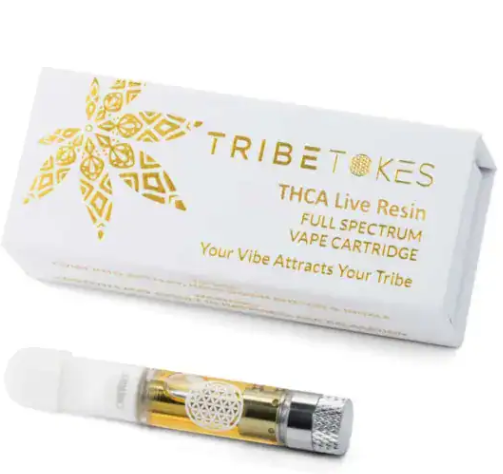
The best sativa carts by TribeTokes have been part of that education wave. The brand’s commitment to publishing full terpene panels, mapping its sativa cart products to specific strain profiles, and educating consumers on the relationship between terpene composition and effect character is exactly the kind of brand behavior Latin American consumers now use as a benchmark for what premium looks like.
The battery for carts conversation
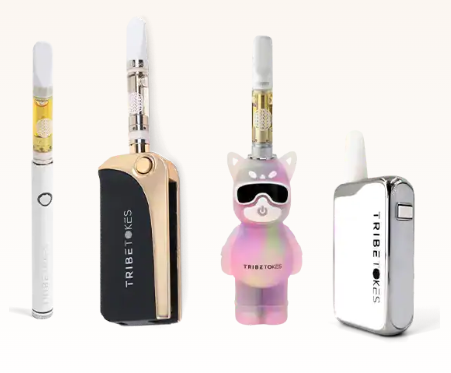
Alongside cartridge hardware came something Latin American consumers had never been taught to consider — the battery for carts and its direct relationship to experience quality. U.S. brands like TribeTokes educated consumers on the fact that a variable voltage battery for carts is not an accessory but an essential tool. Dialing down to 2.4V for a terpene-rich sativa formulation preserves the volatile limonene and terpinolene that define the experience. Running the same cart at 3.6V burns those compounds off entirely.
In Latin America, where the dominant battery for carts has historically been a fixed-voltage pen running too hot for terpene preservation, this realization hit hard. Consumers understood they had been undermining premium products simply through incompatible hardware — and that created immediate demand for better batteries and better guidance.
What Latin American Consumers Want Now
The influence of U.S. vape culture has created a new consumer profile that did not exist at scale five years ago. This consumer is urban, aged 25 to 40, health-conscious, and deeply skeptical of unverified quality claims. They want a sativa experience that is specific, consistent, and documented. They want to know the strain, the terpene profile, and the extraction method. They want ceramic coil hardware and a variable voltage battery for carts. And they want a brand with a verifiable identity and a public commitment to quality.
That is exactly what TribeTokes built its entire brand to deliver. The brand’s THCa carts — offering the full sativa experience within a hemp-compliant product architecture, backed by COA documentation and ceramic coil hardware — represent exactly the kind of innovation that Latin American markets will adopt as their own regulatory frameworks mature.
Conclusion
The hand-rolled joint is not going away. It is too culturally embedded and too communal to be displaced entirely. But the sativa experience available through a premium vape cart — strain-specific, terpene-verified, delivered through ceramic coil hardware with a variable voltage battery — is genuinely different from anything the informal Latin American market has historically offered. Different in quality, consistency, safety, and depth of experience.
TribeTokes represents the standard driving that difference. Full-spectrum and live resin sativa formulations, published COAs, ceramic coil hardware, optimized battery for carts guidance, and a THCa carts line extending the portfolio into hemp-compliant territory — everything a Latin American sativa consumer discovering U.S. quality standards would use as their reference point for what premium actually means.
The shift is underway. And the Latin American sativa consumer who emerges from it will be one of the most informed, quality-conscious consumers anywhere in the world.
Follow Sounds and Colours: Facebook / Twitter / Instagram / Mixcloud / Soundcloud / Bandcamp
Subscribe to the Sounds and Colours Newsletter for regular updates, news and competitions bringing the best of Latin American culture direct to your Inbox.