

The Napo Pulse: Why Sound is the Amazon’s Most Ignored Cultural Asset
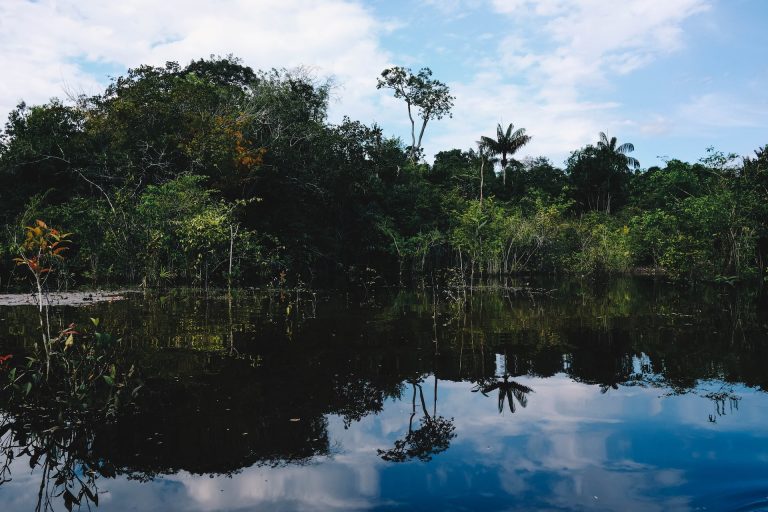
20 May, 2026The Amazon is not just a space that can be observed but one that needs to be heard. As much as the “colours” of Latin America, like the street art of São Paulo and the verdant forest of Ecuador, attract the attention of the media, the auditory aspect of the forest is what serves as its nervous system. Whenever there are no more insects making their nighttime calls and no birds fighting for airspace, there is already a collapse.
This concept has been fully grasped by organisations in Napo province, such as Yuturi Warmi, which is an all-female indigenous group of guards. The group named itself after the “bullet ant,” a creature that uses defence mechanisms as a colony while delivering a sting worthy of reverence.
As opposed to patrolling areas in search of illegal gold miners, these women serve as protectors of the biological library that has been there for millennia. It is easy for the outsider to mythologise the “silence” of nature, yet it is the call of danger for the Kichwa.
Why the “Soundscape” is the Forest’s Real Health Chart
Whereas an ordinary eco-tourist may simply see the jungle as scenery for their camera shots, for those who live amongst it, the soundscape is nothing less than a rapid stream of information. This is the distinction that makes all the difference between an area that’s alive and merely empty. Just listen, and you will hear whose side the forest is on.
- Acoustic niche hypothesis: Every animal in the forest is tuned into a particular frequency. When there are “holes” in the audio spectrum, that means a particular species has been eliminated due to habitat loss.
- Early warning system: Acoustic indices are able to detect a biodiversity collapse in a forest several years before the physical extinction of species is confirmed.
- Cultural resistance: For indigenous tribes like the Kichwa, music from their culture and recordings from the fields serve as legally binding evidence of ownership in land disputes.
- The “human test” of sound: Whereas a well-edited documentary shows you the version of nature that the filmmaker wants you to see, a day-long field recording reveals the true story – complete with sounds of chainsaws cutting down trees and dredging going on illegally.
- Indigenous autonomy: Recording technology makes it possible for people to monitor their environment without the interference of external experts whose intentions may be dubious.
From the Napo to the Digital Wilds
The logic of the rainforest – observing before acting – applies just as much to our digital lives. When you’re back from the wild and looking for a bit of downtime, the internet can feel like another jungle to navigate.
The real kicker for the modern, tactical user is the “no-risk” entry point, you can see it here: https://casinosanalyzer.co.nz/free-spins-no-deposit/free-play. It goes without saying that while every site is trying to get its share of attention from users, the best thing to do is not rush into depositing funds to see what the platform can offer you. Rather, you would want to find ways through which you can try out the “system” without even having to deposit anything at all.
Of course, the internet itself is a jungle to navigate as well. This is why Casino Analyzers’ expert reviewers become the digital version of a guide – filtering out the junk. Would you go on a tour of any destination with a guide who has not travelled that road before? No way. Then why would you sign up on a site that has not passed its checks on payouts and transparency?
Decoding the Acoustic Nervous System of the Rainforest
In order to keep the forest alive, one has to maintain its noisiness. At the point at which satellites detect a clearing in the forest, the local “sound” will have long since disappeared. Therefore, bioacoustics is an important weapon in the armoury of the contemporary environmentalist. It is a method that turns the focus away from the defensive nature of conservation to territorial defence.
Whereas traditional monitoring methods frequently run into trouble when faced with the Napo’s impenetrable triple canopy, sound carries effortlessly through the canopy. It provides information about the health of amphibians, all the way to illegal logging activities, like the hum of saws heard far away.
This isn’t just about recording nature for the sake of a soundscape; it’s about establishing a baseline of life. Every chirp from a bird, every buzz from a cicada, and even the low-frequency roar from a jaguar all make up what is known as an “acoustic niche.” The presence of overlapping frequencies, or the absence of certain frequencies, suggests that something is amiss in the natural order of things.
The ability to observe these changes is one that the Yuturi Warmi have inherited from generation to generation, long before bioacoustic devices were used on the ground. The catch here is that while the technology helps understand these changes in the forest environment, it fails to take into account the most crucial aspect: the presence of people living in the forest. Without humans, bioacoustic devices would be useless because there would be no one to tell what a healthy forest sounds like.
How to Be a Pro-Level Consumer of Culture
But if you really want to be an ally of the “Sounds and Colours” of the area rather than merely observing them, then you will need to realign your priorities with regard to both your time and money.
- Avoid the curated “eco-tours”: Instead, seek out local initiatives, where the funds go straight to the rangers and their communities, not a foreign travel company based in London or New York.
- Buy music and film from field recordings labels: Many independent labels that sell field recordings use the money for land rights defence and litigation.
- Third-party filtering: For any entertainment service, whether music, movies, or anything else, do not trust the platform’s promotional material. Read the third-party reviews first.
- Focus on indigenous sovereignty: If your project lacks the prior and informed consent of the local community, then it’s simply another mode of extraction, regardless of the greenwashing that might be going on.
Best Things are Free
The greatest gifts that the region offers are not for purchase; all that is required is for one to be receptive. The common mistake made by most organisations is in the effort to sanitise their experience to appeal to Western sensibilities, when the greatest gains are to be found in the dirt, the din, and the rough edges.
If it’s a cruise down the Napo River or playing slots on a gaming floor online, it’s always the same mantra: audit your surroundings, heed the advice of the experts, and don’t ignore the silence. When you hear someone speak from the heart or from the soul, take their word for it.
Follow Sounds and Colours: Facebook / Twitter / Instagram / Mixcloud / Soundcloud / Bandcamp
Subscribe to the Sounds and Colours Newsletter for regular updates, news and competitions bringing the best of Latin American culture direct to your Inbox.