

Understanding Audio Latency Challenges for Latin Online Gamers
09 October, 2025
Source: https://unsplash.com/photos/a-young-boy-wearing-headphones-watching-a-television-Mgeyi80ZEvE
If you’re a gamer in Latin America, you’ve probably experienced that frustrating moment when you hear footsteps behind you a split second too late, or when your perfectly timed ability feels just slightly off. That’s audio latency at work, and for gamers across Latin America, it’s a bigger challenge than most people realize.
Audio latency is the tiny delay between when a sound is created in a game and when you actually hear it through your headphones or speakers. In competitive gaming, even 50 milliseconds can mean the difference between victory and defeat. For Latin American gamers, this challenge is compounded by unique infrastructure limitations and geographical factors that players in North America or Europe might not fully understand.
Let’s dive into why audio latency hits differently in Latin America and what you can actually do about it.
The Infrastructure Reality in Latin American Gaming Markets
Internet Connectivity Variations Across the Region
Here’s the thing about gaming in Latin America: not everyone’s playing on the same level field when it comes to internet infrastructure. If you’re in São Paulo, Buenos Aires, or Mexico City, you might have access to decent fiber connections. But venture outside major urban centers, and the story changes dramatically.
Average ping rates vary wildly across the region. Brazilian gamers might see 30-50ms pings to regional servers, while players in more remote areas of Peru or Bolivia could be dealing with 100ms or more. And that’s just network latency before we even talk about audio.
The Compound Effect of Multiple Latency Sources
Most gamers focus on ping, but there’s a hidden layer of delay that often gets overlooked: audio latency stacks on top of network latency. Think of it this way: your game data travels to the server and back (network latency), then your computer processes the audio, and finally that sound reaches your ears through your audio equipment (audio latency).
For Latin American gamers already dealing with higher ping times due to server distances, adding even 50-100ms of audio delay creates a noticeable disadvantage. In fast-paced shooters like Valorant or CS:GO, this compound effect can make you feel like you’re always reacting instead of acting.
Mobile Gaming Dominance and Wireless Audio Considerations
Source: https://unsplash.com/photos/man-wearing-black-corded-headphones-while-holding-phone-CgKpB3iSX5c
Why Mobile Gaming Leads in Latin America
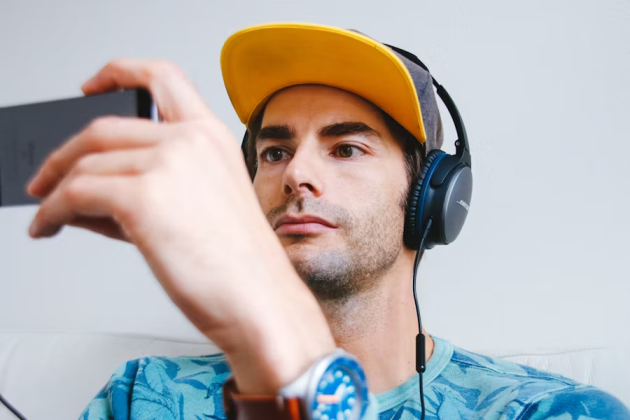
Walk through any metro station in Mexico City or Bogotá, and you’ll see it: everyone’s gaming on their phones. There’s a good reason Free Fire became massively popular across Latin America. Smartphones are simply more accessible than gaming PCs or consoles, especially when you’re looking at price points.
This mobile-first gaming culture has created a huge demand for portable audio solutions. You can’t drag a gaming headset with a three-meter cable onto the bus, right? This is where wireless earbuds have become the go-to choice for millions of Latin American mobile gamers. Modern options like JBL wireless earbuds offer the convenience mobile gamers need, though it’s worth understanding what you’re trading for that portability.
Wireless Technology Trade-offs
Let’s talk honestly about Bluetooth. Standard Bluetooth audio creates around 100-200ms of latency, which sounds terrible for gaming. But here’s where it gets interesting: not all wireless is created equal.
Different Bluetooth codecs handle audio differently. The basic SBC codec that most devices use? That’s your 150-200ms delay right there. AAC, which Apple devices prefer, brings it down to around 80-150ms. aptX Low Latency can get you down to 40ms, though not all devices support it.
For casual mobile gaming like puzzle games or turn-based strategy, this latency is barely noticeable. But if you’re pushing ranks in competitive mobile shooters, you’ll feel it. The key is knowing when wireless convenience outweighs the latency cost, and when you need to consider alternatives.
Console and PC Gaming Audio Requirements
Source: https://unsplash.com/photos/a-pair-of-headphones-sitting-next-to-a-keyboard-BuEOcNiyoAY
The Shift Toward Competitive Gaming in Latin America
Latin America’s esports scene isn’t just growing; it’s exploding. Brazilian League of Legends teams are competing at world championships. Mexican Rainbow Six Siege players are taking on the best globally. Argentina has produced some incredible CS:GO talent.
When you’re playing at that level, audio isn’t just about hearing the game; it’s about competitive advantage. Professional players can identify enemy positions by footstep direction and distance, hear ability casts before visual cues appear, and react to sound faster than sight in many scenarios.
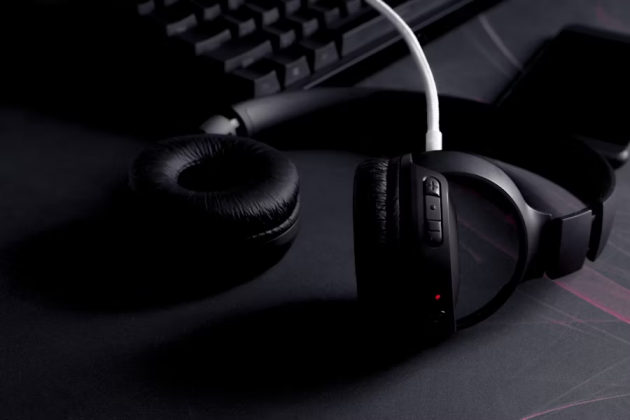
This is where serious gamers make a clear choice: wired audio. There’s no getting around physics. A direct analog connection or USB digital connection eliminates Bluetooth’s inherent delay completely.
Wired Audio Advantages for Competitive Play
Think of wired audio as the foundation serious gamers build on. Whether it’s a 3.5mm analog connection or USB digital, you’re looking at essentially zero additional audio latency beyond what your computer’s sound processing creates, which is typically under 10ms.
For competitive gaming, many players invest in dedicated equipment designed specifically for gaming scenarios. When you’re serious about climbing ranks or competing in tournaments, choosing the best gaming headset with wired connectivity becomes a priority. These are built with features like superior positional audio, comfortable designs for long sessions, and communication-optimized microphones that matter in team coordination.
The difference is tangible. In a game like Valorant, hearing an enemy’s exact footstep location 100ms earlier can mean you pre-aim the right angle. In CS:GO, catching a bomb plant sound immediately lets your team rotate faster. These microseconds add up.
Practical Solutions for Minimizing Audio Delay
Optimizing Your Current Setup
Before you rush out to buy new equipment, let’s talk about what you can do right now. Your audio drivers matter more than you’d think. Outdated or generic drivers can add unnecessary processing delay. Check your audio device manufacturer’s website for the latest drivers, especially if you’re on Windows.
In your game settings, look for audio buffer size options if available. Smaller buffers mean less latency but require more processing power. Most modern systems can handle smaller buffers without issues, reducing delay by 10-20ms.
Also, disable audio enhancements. Windows has built-in spatial sound and enhancement features that sound cool but add processing delay. For competitive gaming, turn these off.
When to Choose Wired vs Wireless
Here’s a practical framework: Match your audio choice to your gaming style.
Playing story-driven RPGs, casual mobile games, or single-player adventures? Wireless convenience probably outweighs the latency. You’re not losing competitive matches over 100ms of audio delay in these scenarios.
Grinding ranked matches in competitive shooters, MOBAs, or fighting games? Go wired. Every millisecond counts, and you want every possible advantage.
Gaming across multiple devices or constantly on the move? Wireless makes sense for versatility, even if you accept the latency trade-off.
Many Latin American gamers actually keep both options available, switching based on what they’re playing that day.
The Future of Gaming Audio in Latin America
The good news? Things are improving. New Bluetooth codecs like aptX Adaptive and the upcoming LC3 standard promise sub-30ms latency, making wireless genuinely viable for competitive gaming.
5G expansion across Latin American cities will reduce network latency significantly. When your ping drops from 60ms to 20ms, that compound latency effect becomes less painful.
Cloud gaming services expanding into the region also change the equation. While cloud gaming adds its own latency, it could democratize access to high-end gaming without requiring expensive hardware.
Audio equipment manufacturers are also paying attention to Latin American markets. You’re seeing more products targeted at the region’s price points without sacrificing too much performance. The balance between cost and quality is improving every year.
Conclusion
Audio latency might seem like a technical detail, but for Latin American gamers, it’s a real competitive factor. Between higher network pings, wireless audio popularity, and infrastructure challenges, the compound effect creates noticeable disadvantages.
The solution isn’t one-size-fits-all. Understand your gaming priorities: casual mobile gaming suits wireless convenience, while competitive PC gaming demands wired precision. Optimize what you have with driver updates and settings tweaks. And stay informed as technology improves.
Latin America’s gaming community is passionate, skilled, and growing. With the right understanding and equipment choices, you can minimize latency’s impact and focus on what matters: playing your best.
FAQs
What is considered acceptable audio latency for gaming?
For competitive gaming, aim for under 30ms total audio latency. Casual gaming can tolerate 80-150ms without major issues. The acceptable threshold really depends on game genre: fast-paced shooters and fighting games need the lowest latency, while strategy and RPG games are more forgiving.
Does using wireless audio always cause more latency than wired?
Generally yes, but the gap is closing. Standard Bluetooth adds 100-200ms, while wired connections add essentially zero. However, newer wireless technologies like aptX Low Latency can achieve 40ms, which is acceptable for many gaming scenarios. The best approach is testing what works for your specific games.
How can Latin American gamers test their audio latency?
Download audio latency testing apps like “Audacity” for PC or mobile apps that measure round-trip delay. Many gaming headset software suites also include latency monitors. Practically, you can also just pay attention to whether audio feels synchronized with visual cues during gameplay.
Are expensive audio solutions always better for reducing latency?
Not necessarily. A budget wired headset will always have lower latency than expensive wireless earbuds. Price often reflects audio quality, comfort, and features rather than latency alone. For Latin American gamers on budgets, a solid wired option typically offers better latency performance per dollar than premium wireless alternatives.
Follow Sounds and Colours: Facebook / Twitter / Instagram / Mixcloud / Soundcloud / Bandcamp
Subscribe to the Sounds and Colours Newsletter for regular updates, news and competitions bringing the best of Latin American culture direct to your Inbox.