

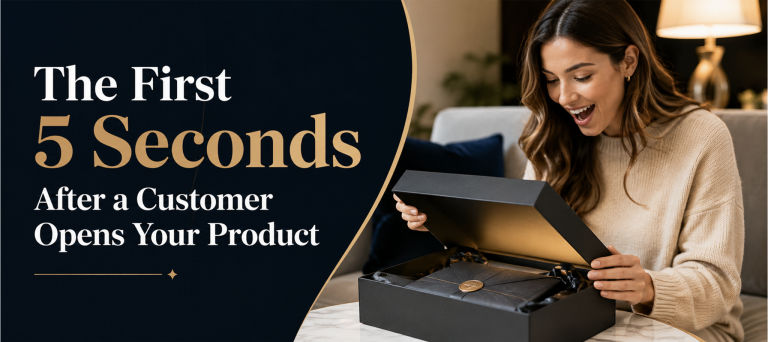
The First 5 Seconds After a Customer Opens Your Product
05 June, 2026The first few seconds after a customer opens your product can decide how they feel about your brand. Before they test the product, read the instructions, or check the details, they already form an impression through packaging, presentation, texture, colors, and the overall unboxing experience. This moment is small, but it can strongly influence customer trust, brand recall, social sharing, and repeat purchases.
In today’s competitive market across Latin America and the Caribbean, customers expect more than just a product. They want an experience. Whether they buy skincare, cosmetics, jewelry, electronics, candles, subscription boxes, artisanal food, or luxury accessories, the way the product is presented matters. Research on packaging design shows that visual elements such as color, graphics, logo, and layout can influence purchase intention through brand experience. This means packaging is not just a protective layer. It is part of the customer’s decision-making process.
Why the First 5 Seconds Matter
When a customer opens a product, the first five seconds are emotional. They notice whether the packaging feels premium, organized, clean, cheap, confusing, or exciting. This quick reaction can shape how they judge the product itself. If the box feels high-quality, customers often assume the product inside is also high-quality. If the packaging looks weak or careless, it can reduce the perceived value of the product.
This is why brands across Brazil, Mexico, Colombia, Argentina, and the Caribbean islands invest in unboxing design. Unboxing is not only about opening a box. It has become a marketing experience. Studies describe unboxing as a meaningful practice that can create emotional connection and attract customer attention, especially through videos and social media. For e-commerce brands in the region, where rapid growth in online shopping has transformed consumer habits, the delivery and opening experience is more important than ever.
The First Impression Starts Before the Product
Many businesses think the customer experience begins when the customer uses the product. In reality, it begins when the package arrives. The shipping box, outer packaging, branded label, opening style, inserts, tissue paper, product arrangement, and thank-you card all contribute to the first impression.
A clean and well-structured package tells the customer that the brand is professional. A messy or poorly packed product can create doubt, even if the product itself is good. For premium products, the packaging should feel intentional from the moment the customer touches it.
The weight of the box, the smoothness of the finish, the way the lid opens, and the way products are placed inside all create a sensory experience. These small details can make the customer feel that they purchased something valuable. In markets like Mexico City, Bogotá, São Paulo, and Santo Domingo, where competition among local and international brands is growing fast, that sensory difference can set your brand apart.
Packaging Builds Perceived Value
Perceived value is the value a customer feels a product has, even before using it. Packaging plays a major role in this. A product placed in plain or weak packaging may feel ordinary, while the same product placed in premium packaging can feel more expensive and desirable.
For luxury and high-end brands in Latin America and the Caribbean, presentation is often just as important as the product. This is where custom luxury rigid boxes can help brands create a powerful premium impression. Custom luxury rigid boxes can help brands create a powerful premium impression. These boxes are strong, elegant, and suitable for products that need a high-value presentation, such as perfumes, cosmetics, jewelry, watches, skincare kits, artisanal spirits, and gift sets.
Luxury rigid packaging can make the product feel more exclusive. It also supports better product photography, influencer unboxing videos, and retail display. When customers open a well-designed rigid box, they are more likely to feel that the brand cares about quality.
The Role of Design in Customer Emotions
Packaging design affects how customers feel. Colors can create mood, typography can communicate personality, and layout can make the brand feel clean, modern, premium, playful, or natural. For brands in Latin America and the Caribbean, this is also an opportunity to reflect regional identity. Warm, vibrant colors can connect with cultural aesthetics that resonate deeply with local consumers, while clean minimal design can signal premium quality for export markets or upscale local buyers.
For example, a natural skincare brand from the Dominican Republic or Jamaica may use earthy tones, tropical imagery, and clean fonts to communicate authenticity and heritage. A luxury chocolate brand from Ecuador or Colombia may use deep colors, gold details, and textured packaging to reflect the richness of the source ingredients. A tech accessory brand in São Paulo or Buenos Aires may use sharp lines and modern finishes to show innovation.
The first five seconds are not only visual. Customers also notice touch, sound, and movement. A smooth opening, magnetic closure, soft-touch coating, embossed logo, or perfectly fitted insert can make the experience feel more memorable.
Organization Creates Confidence
When a customer opens a product box, everything inside should feel organized. Products should not move around, look damaged, or feel randomly placed. Good internal structure tells the customer that the brand is careful and reliable.
Product inserts, dividers, foam, cardboard trays, and compartments help organize the items inside the box. This is especially important for fragile or premium products such as glass bottles, cosmetics, electronics, accessories, and gift sets, including regionally crafted products like rum gift packs, artisan coffee collections, or handmade jewelry from across the Caribbean and South America.
A clean layout also makes the product easier to understand. Customers should instantly know what is inside, how items are arranged, and what to do next. If the box includes multiple items, a product card or small guide can improve the experience.
Make the Unboxing Experience Shareable
Social media has made unboxing more powerful than ever. Across Latin America and the Caribbean, platforms like TikTok, Instagram, and YouTube Shorts have a massive and highly engaged user base. Customers regularly share attractive packaging, and local influencers command strong trust among their audiences. Unboxing content in Spanish and Portuguese can reach millions of viewers across multiple countries, making the packaging itself a cost-effective marketing channel.
To make your packaging more shareable, use clean branding, strong color contrast, neat product placement, and small surprise elements. A thank-you note, discount card, sample product, or a personalized message printed inside the lid can make the customer feel special. Adding a phrase in Spanish, Portuguese, or a regional dialect can also create a deeper sense of connection with local buyers.
Opening Style Can Change the Experience
The way a box opens can affect how the customer feels. A basic opening may be functional, but a unique opening style can create excitement. The opening style should match the product and brand personality.
For example, Custom Flip Top Boxes are a strong option for brands that want a premium yet practical opening experience. This style works well for cosmetics, perfumes, tech accessories, jewelry, gift sets, and promotional kits. For brands in the Caribbean tourism and export sector, where products are often given as gifts or sold in hotel boutiques and duty-free shops, the reveal moment that a flip-top box creates can reinforce a sense of luxury.
A flip-top box can also make the product easier to display and reuse. When packaging feels useful and attractive, customers may keep it instead of throwing it away. This keeps your brand visible for longer, which matters in markets where brand loyalty is still being built.
Small Details Make a Big Difference
The first five seconds are shaped by details. A centered logo, clean print quality, strong corners, smooth finish, and perfect product fit can make the brand feel professional. On the other hand, poor printing, weak structure, loose inserts, or messy packaging can harm the customer’s trust.
Brands should also think about the message inside the package. A short thank-you card, care instructions, product story, QR code, or loyalty offer can guide the customer after the first impression. These elements help continue the experience beyond the opening moment. For brands expanding across borders within the region, including both Spanish and Portuguese text, or adding a line in English for tourist-facing products, shows consideration for a diverse audience.
The goal is not to make packaging complicated. The goal is to make it intentional. Every detail should support the brand story and improve the customer’s feeling.
Final Thoughts
The first five seconds after a customer opens your product are powerful. In that short moment, the customer decides whether the product feels premium, trustworthy, exciting, or forgettable. For brands competing in the fast-growing markets of Latin America and the Caribbean, where e-commerce is expanding rapidly and consumers are increasingly brand-aware, good packaging can be a decisive advantage.
Packaging should never be treated as an afterthought. It should be part of the product experience. A well-designed unboxing moment can turn a simple purchase into a memorable brand interaction, one that earns a social media share, a repeat order, and genuine loyalty.
When your packaging looks professional, feels strong, opens smoothly, and presents the product beautifully, customers across the region are more likely to trust your brand, remember it, and come back.
Follow Sounds and Colours: Facebook / Twitter / Instagram / Mixcloud / Soundcloud / Bandcamp
Subscribe to the Sounds and Colours Newsletter for regular updates, news and competitions bringing the best of Latin American culture direct to your Inbox.