

An interview with Bruno Capinan: Beijo de Bicho
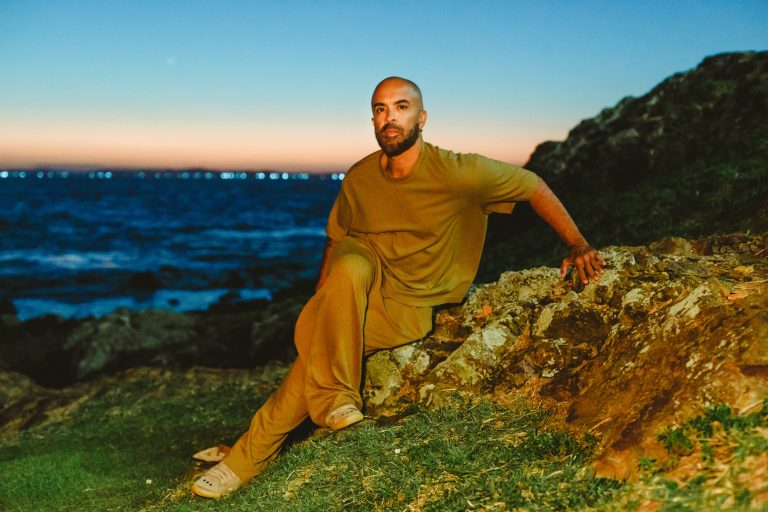
12 November, 2026Bruno Capinan is a Brazilian artist from Bahia and is currently based in Salvador. He has spent over two decades building a career that spans Brazilian music, pop experimentation, and the experiences of the diaspora. His new album is a tantalising slice of neo-MPB moving freely between MPB, funk, samba, afoxé and Tropicalista influences. It has much in common with the new wave of Tropicalistas, such as Bruno Berle and Nyron Higor etc., with elements of plucked nylon guitar strings, contemporary electronics, a warm voice and a queer sensibility. It is an album about love, desire, politics, and the many ways of being in the world. It features a constellation of Brazilian musicians, including a collaboration with Tropicalista poet Waly Salomão, as well as a tribute to Gal Costa. The core recordings took place at Estúdio Guanabara in Rio de Janeiro, where the musicians played together in the same room with the windows open so that the sounds of Rio became part of the sessions. The release is a partnership between Brazilian label dobra discos and French label Pineapple French Pop. Capinan took some time to answer my questions with his detailed answers being extremely smart and wide ranging, taking in everything from AI to neo-Pentecostal churches.
Sounds & Colours: How does the album respond to a world increasingly dominated by AI?
Bruno Capinan: Beijo de Bicho is a response to artificial times. But we have to go back to 2021, when I recorded my previous album. I couldn’t be physically present or involved in the recording process that year because of the pandemic. I was still in lockdown in Canada, in Toronto, where I have a house and had been living for about 20 years at that time. Fast-forward to Beijo de Bicho and those five years in between, and we have seen the increasing development of AI. Real musicians being replaced by artificial intelligence became a thing, and in conversations with friends, we were all very concerned about the future of not only music but humanity as we know it.
As we know now, you can make anyone sing using AI. Robots can play the guitar or almost any instrument. You can make a whole album using AI and pretend it’s a real thing. So, for me, it was really important to be back in the studio with musicians, all together, recording together, making mistakes together. I didn’t want anything to be artificial. A lot of the songs on the album were recorded in one take. For some of them [there was] a maximum of three takes for each song, but for most of Beijo de Bicho we kept the first takes recorded in Rio.
In the songwriting process, from 2022 to 2025, Brazil went through a new political phase. Lula was elected for his third term, but everyone had to fight against all the fake news being generated by AI. That became a global issue, and as a Black and queer creator, I came to the realization that AI is just another tool for oppression and modern slavery. Streaming companies, mostly owned by white oligarchs, are now making billions by replacing human emotions with a very precise vision of the world. However, the last election in Brazil has shown the importance of community engagement, and we are beginning to take notice of how we want our future to look.
S&C: The sounds of Rio de Janeiro seep into the record. Was this an attempt to bring in the personality of Rio to the recordings?
BC: Because the previous album was recorded in Rio without me, I really wanted to record Beijo de Bicho in Rio. I can say it was accumulated “FOMO” [fear of missing out]. Also, because of Lucas Nunes, who produced the album with me. We met in Bogota, Colombia, in 2023. Lucas was performing at the same festival with his band, Bala Desejo, we became close friends, and I kind of made a promise that he was going to produce my next album, but I didn’t know when. So, in 2025, I saw Lucas on social media playing with Caetano in Copacabana during the October 2025 political protests in Rio. The next day, I called him and asked if he was ready, haha.
He was about to open a new studio in Rio in partnership with his friend Leo Marques. They were moving all their equipment from Belo Horizonte to Rio. Lucas told me he had some time at the end of October 2025, about 10 days, and if I was serious about it, I could just come to Rio for those 10 days, and we could record the album, everyone playing together. Because I wanted the recording to be exactly like that, you know, all the musicians playing together, it all made sense. We then started floating the names of musicians we wanted to invite. The first name that came to mind for me was Decio 7, who is a drummer/percussionist from São Paulo. I didn’t want everyone to be from Rio because I’m not from Rio; I’m from Bahia, and I wanted to have people from different states in Brazil, people from different backgrounds.
Then we invited bass player Alberto Continentino, who’s from Rio and probably the number one bass player of our generation. And then Lucas suggested Paulo Emmery, who plays pretty much every single instrument a human can possibly play. I had about a week before I went to Rio, before I travelled to Rio, to decide on the songs. I had written about 60 songs, and Lucas and I decided which ones to keep. But once we started recording at this new studio, there were a lot of challenges; not just for me, as I had never worked with those musicians, but also for Lucas and Leo, who had just moved all the equipment to Rio. Beijo de Bicho was the first-ever recording there. The studio is located at the foot of Corcovado. A beautiful and magical place, full of instruments. It was quite a humble process, in the sense that there was no certainty. We all had to be resourceful because it was the first recording session there. They were still figuring out what to do with the cables, what to do with the instruments, positions, and which microphones to use.
So, I decided to embrace the process. I asked Lucas to keep the doors and windows of the studio open. I recorded my vocals using different microphones in the middle of the room, next to the drums or next to the piano, while everyone chilled outside for smoke breaks. It was a very relaxing recording process. Decio and I shared an apartment in Rio, and he would wake up at 7 am to go for his morning walks on the beach. And I would sleep until noon, when he was all pumped up for the recordings. We then walked to the studio, and we started by playing the next song, like we were at home.
S&C: Where were your previous albums recorded? How would you compare recording in Rio to Salvador?
BC: I recorded most of my albums in Toronto, where I began my music career in 2008, with my first release in 2010. I only recorded one album in Salvador, which was my second LP, Tudo Está Dito, in 2013. Salvador is such a big part of who I am as an artist that I think the only comparison is that in Rio I’m not in my element, as in Salvador. I’m still a foreigner in Rio, pretending to be a Carioca. But the closest city to Salvador in Brazil would be Rio. The vibe is quite similar, with a little bit of a cave feel to it. In Rio, the sea is colder, and you’re surrounded by nature, sex, and violence.
S&C: Can you explain the rise of neo-Pentecostal churches in Brazil and the connection you have drawn between what’s happening in Gaza and the violence experienced by communities in the favela of Alemão in Rio de Janeiro?
BC: We have seen the rise of neo-Pentecostal churches in Brazil for about 40 years, I would say. Some of my family relatives were already neo-Pentecostals in the 80s, after the dictatorship, and the churches exploded in size in the 90s. They are now at every level of influence, especially in politics. They control the political system in Brazil and have very specific political agendas based on patriarchal dominance, and they have direct links to the militias. Very exclusionary and conservative. Kind of paradoxical when you think of Brazil, right?
When you think of Brazil, you think of carnival and half-naked people on the beaches. Brazil’s a very sexual country. You know, Brazilians are very sexual beings. But at the same time, very religious. The neo-Pentecostal churches helped elect Bolsonaro in 2018 and never took any accountability for his cruelty during the pandemic. They ousted a president in 2016. You know, it was the evangelicals who pushed for the impeachment of President Dilma in 2016. Now, with every election that we have in the country, the candidates have to please that section of the electorate, even though we know the danger they represent for our political future.
When I was writing the last song for Beijo de Bicho, which is “Ilhas Cayman”, a few days before I went to Rio for the recordings, I wanted to draw a parallel between the rise of the neo-Pentecostal churches and Trump. The rise of the far-right movement globally is not a coincidence; it’s a project in which the neo-Pentecostal churches are a direct asset. In Brazil, a lot of people who live pay cheque to pay cheque consider themselves upper class because they have a car and a one-bedroom apartment. They think that one day, they too can become Jeff Bezos, including one of my siblings, who is evangelical. So, I wanted to write a song in response to the rise of the neo-Pentecostal churches in Brazil as a political commentary.
On the last day of recordings in Rio, October 28, 2025, a massacre happened in the Complex of Alemão, the biggest favela in Rio, where police killed over 120 young men. At that moment, I had already written and recorded “Ilhas Cayman”, in which I drew a parallel with the genocide in Palestine. The parallel was drawn to make oppressed people in Brazil realize that we are losing our humanity. Political division is a deliberate and well-thought-out project by the elites. Being a Black person, a former immigrant to Canada, and queer, I feel like there’s no way for me to turn a blind eye to what’s happening in Palestine and also what’s happening to Black communities in Brazil. We have just re-elected Lula as our president for the fourth time, but people in the favelas are still exposed to police brutality on a daily basis. Of course, the violence in Rio is not comparable to what’s happening in Gaza. Genocide is not the same as a systemic racist structure that still allows people to work and go to the beach. I’m aware of that. However, the dehumanization of people based on faith and caste, particularly, is the reason why I needed to make the parallel.
S&C: How did the track using Waly Salomão’s lyrics come about? [Waly Salomão (1943-2003) was a renowned Tropicalista poet]
BC: I grew up listening to Caetano, Gal, Gil, and all the artists from the Tropicalia Movement. The albums that my parents listened to when I was a kid were mostly from the 60s and 70s in Brazil, during the dictatorship. Waly Salomão was a big part of Gal’s career. He co-wrote the song “Vapor Barato” alongside Jardes Macale and directed Gal’s show Fa-tal – Gal a Todo Vapor in the 60s. He was the poet from this generation that I connected with the most, not only stylistically but also because of his big personality. He was clever and foul-mouthed at the same time. His poems had a huge impact on my writing, and, in fact, I wrote my first song in the town where he was born, Jequie, where I lived for a few years, at ages 13 and 14, with my dad in the late 90s. I met Waly’s family, including his brother Jorge, also a poet, and the conversations I shared with him really helped define my role as a writer. It was through Waly that I discovered Camus, W. H. Auden, e. e. cummings, Clarice Lispector, and so many others. I was given his book Labia as a Christmas gift and set many of his poems to music. “Sailormoon” is an extract from the poem “Clandestino” that he dedicated to singer Adriana Calcanhotto, and I wrote the music in the early 2000s, before Waly passed away. It’s an anti-utopia song, as if that could be realistic to a poet. Beijo de Bicho is an album about creating utopian refuges, finding yourself in the midst of chaos, and yet loving others, connecting to others, and desiring the unknown. Waly’s nickname was Sailormoon, Waly Sailormoon [a play on his surname].
S&C: “Baby (Tudo é Relativo)” is a tribute to Gal Costa. How important is the work of Gal Costa to you?
BC: [The track] is a response to Caetano’s “Baby”, recorded by Gal and her first hit song in the 60s. In Caetano’s “Baby”, life is very definite; he wrote about certainty and things that were very temporal. In my “Baby”, it is the complete opposite, you know? Basically stating that everything is relative: numbers, sadness, losses. Gal’s music and presence are still with us.
In January 2020, I was in Rio, just before the pandemic, and before I went back to Canada, I went to see Gal perform in Rio. A dear friend of mine, Luana Carvalho, the daughter of Beth Carvalho, took me to see the show and wanted to introduce me to Gal. I have been friends with Caetano and Gil for many years, but had never met Gal. So, Luana took me to the dressing room after the show, and I met Gal. I remember walking into the room and kissing Gal on the mouth. Gal asked me to sit down and eat sushi with her. Then, on the way out, I kissed Gal again and told her that I loved her. She looked straight into my eyes and said, “I love you too.”
And that was the first and last time I saw Gal. She was and still is such a huge influence on me, my singing, and my posture on stage. After she passed away, I wrote to Caetano, telling him I had a dream about Gal a few days before she passed. I wrote the song in 2024. I remember sitting on the floor of my living room, writing the song, playing the guitar and singing. And when I finished, I started crying, ’cause I knew at the time that it was, you know, a love letter, my love letter to Gal Costa.
S&C: What’s next for you?
BC: Right now, I am in release mode in Brazil. We have a listening party tonight in São Paulo, then I travel to Bahia for a few days and go back to do a press tour. Next year, we’re going to start touring, starting in Brazil, then Japan, Canada, and Europe in the summer.
I don’t know exactly when; we’re still working on that. But I’m pretty sure it’s going to be in 2027. Also, I recorded two albums, not just one, but two, because I’m crazy. It’s already done, mixed, and mastered. So, there is another album that I’m probably going to put out in late 2027.
You can listen to the album on YouTube, starting with this video depicting its making:
Follow Sounds and Colours: Facebook / Twitter / Instagram / Mixcloud / Soundcloud / Bandcamp
Subscribe to the Sounds and Colours Newsletter for regular updates, news and competitions bringing the best of Latin American culture direct to your Inbox.