

After the Encore: Touring Nights in Latin America and the Caribbean
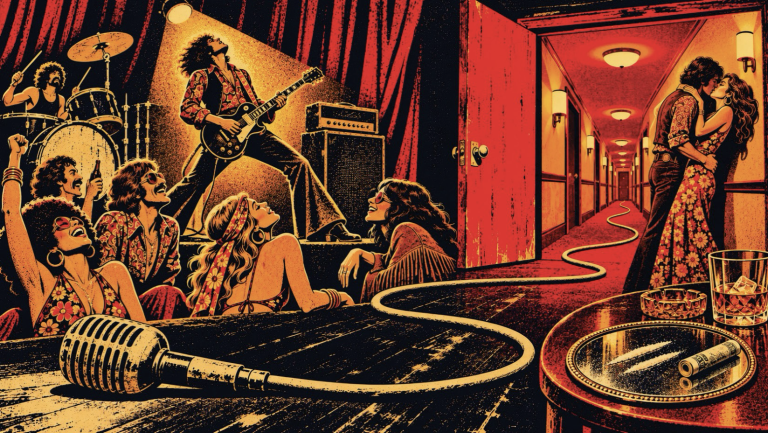
11 November, 2026The crowd had gone home. The amplifiers were cooling. Somewhere down a hotel corridor, the night was just getting started. Whether the show had been in Rio, Bogotá or Kingston, the picture looked much the same: a band still ringing from the stage, and a long drive or an early flight waiting at the end of a short sleep.
Ian Dury gave that life a slogan in 1977 with “Sex & Drugs & Rock & Roll.” The title was short enough for a T-shirt and broad enough to sell a whole mythology. It captured the appetite of the era. It left out the morning after, when somebody still had to get the band out of the hotel, onto the road and through another soundcheck.
Ira Blacker knew that side of the business. As a founder of American Talent International, he helped put acts including Rod Stewart and Faces in front of American audiences. From the agency office, a tour meant contracts, promoters and dates that had to fit together. From backstage, it meant watching what happened when all those arrangements collided with people who had spent weeks living out of suitcases. Both worlds run through Once A King, Now A Prince, his account of a life inside the music business. Readers who turn to the best music autobiographies for a look behind the show get a seat beside the man helping put it on.
The night runs on local time
In much of Latin America, an evening out starts when visitors from other places would be heading to bed. Dinner comes late, the venue fills slowly, and the gathering after the show can stretch toward sunrise.
Add the heat of the coastal cities, the thin air of high-altitude capitals such as Mexico City and Bogotá, and a morning flight to the next island or the next border, and sleep becomes the scarcest thing on the itinerary.
The party had an early checkout
A concert put a useful distance between performer and audience. The stage was higher, the lights were brighter, and the sound was loud enough to make the person holding the microphone seem larger than life. A hotel corridor could erase that distance in a few steps. The person who had been a silhouette an hour earlier was close enough to talk to.
Groupies were part of that world, and the word could flatten a roomful of different people into a single punch line. The attraction was easy to understand. For a fan, a night that began with a ticket might end in the company of someone whose records had been playing in their bedroom for years. For a musician far from home, a stranger might be the first person all day who wanted a conversation that had nothing to do with tomorrow’s show. Sometimes the encounter was tender. Sometimes it was reckless. By morning, one of them might already be gone.
The drugs had a timetable of their own. A stimulant could help someone stay upright through travel, rehearsal and a late set. Hours later, when the room had gone quiet and sleep still wouldn’t come, something else might take the edge off. What began as a way to stretch the night could become a way to get through the day. The tour kept moving either way.
Then the drummer counted them in
For all the stories about what happened after the encore, the hardest thing to explain is why the show could still be so good. A band could arrive worn out and find its footing in the first few bars. That came from rehearsal, from knowing exactly when to lean in or leave space, and from having played together long enough to catch a mistake before anyone out front heard it.
Audiences in this part of the world give back as much as they get. Rock in Rio, first held in 1985, turned a whole city into a stage for bands from around the world. Rod Stewart, one of the acts Blacker’s agency helped bring to American audiences, played Copacabana Beach on New Year’s Eve in 1994 in front of a crowd reported at about 3.5 million people. When a field or a beachfront sings every word back, the exhaustion falls away for a few minutes. Then the lights come up and the band is back on the clock.
That’s where the best music memoirs earn their keep. They can put the exhilaration and the fallout on the same page. Blacker’s view from the business side adds a detail the slogan never had room for. A night could end in chaos, and by the following evening, in Havana, Lima or Santo Domingo as much as anywhere, somebody still had to walk onstage, look out at a room full of people, and give them a reason to remember it.
Follow Sounds and Colours: Facebook / Twitter / Instagram / Mixcloud / Soundcloud / Bandcamp
Subscribe to the Sounds and Colours Newsletter for regular updates, news and competitions bringing the best of Latin American culture direct to your Inbox.