

Chilean Artists Are Rebuilding K-pop’s Playbook on Their Own Terms
14 August, 2026A six-piece Santiago boy band recruits its members through an online casting call, trains for six months without label backing, writes its own songs, designs its own choreography, and cultivates a fan community stretching from Singapore to Costa Rica. That is not the K-pop model borrowed wholesale. It is something Chilean artists have reassembled from its parts and made their own.
That distinction sits at the center of a broader story reported by NPR: how Chile’s young pop generation is not simply consuming the Korean wave but absorbing its infrastructure logic, its fandom architecture and its visual language, then redirecting all of it toward a sound and identity that is explicitly Latin American. The group Q_ARE stands as the clearest example. Their self-managed global fandom, called the Qniverse, draws fans from across multiple continents without a traditional label driving the effort. The Geek HR editorial team, which monitors digital-culture trends for Croatian readers, recognizes in this Chilean scene exactly the kind of transnational, platform-driven phenomenon it covers. geek.hr tracks this fan-culture wave as it moves across borders, reshaping local creative industries one self-organised community at a time.
BTS’s Santiago Stop and the Scale of Latin America’s Korean Wave
The immediate news hook is concrete. BTS will play Santiago in October as part of their comeback world tour, a date that sits within a wider Latin American arc that has already produced sold-out shows in Mexico and includes confirmed performances in Colombia, Peru, Argentina and Brazil. The phenomenon now called Hallyu, the Korean wave, began spreading globally in the 1990s, carrying Korean music, dramas, cuisine and beauty culture from niche enthusiasm into mainstream reach. In Latin America, its current scale is no longer a cultural curiosity.
Demand for BTS in Mexico ran so high that President Claudia Sheinbaum personally contacted South Korean officials to explore adding more dates. That a head of state felt compelled to intervene in concert scheduling captures, more precisely than any other single detail, how far this wave has traveled from its origins.
Q_ARE and the Chilean Reinvention of a Korean Model
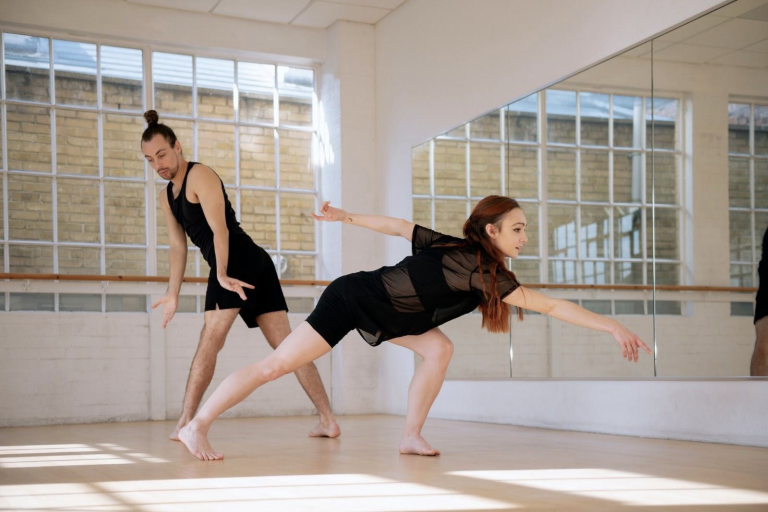
The six members of Q_ARE, Seba, Jamin, Jota, Bin, Aiden and Fabi, found each other through an online casting call roughly two years ago. A six-month audition process followed, along with intensive training. The group debuted in 2024 with the single “Try Again,” then released “FÚ” in May 2026, rehearsing choreography at a dance studio in Santiago ahead of the launch.
Their aesthetic absorbs K-pop directly: lyrics in English, Spanish and Chilean slang layered over visuals that combine retro video-game references, rapid-cut scene changes and bold makeup. The group handles songwriting, choreography, aesthetics and video design internally. No external production house controls the output. That level of self-management is itself a lesson drawn from watching how Korean idol groups operate, then adapted to a context with different resources and different cultural coordinates.
Vocalist Seba, 22, described the position plainly while speaking outside the dance studio during rehearsal:
“I entered the artistic world thanks to K-pop. But despite all the inspiration and influence we have from Korea, we’re clearly not K-pop because we’re Latinos. We’ve transformed it into something of our own.”
That transformation is visible in the material itself. Chilean slang appears alongside English in the same lyric. The visual references are Korean in structure but locally inflected in content.
A Fandom Without Borders, Built on Platform Logic
Q_ARE’s reach illustrates what happens when the self-management model connects with social platform mechanics. The group toured Brazil and has played venues across Chile. Their Qniverse fan community, built without label infrastructure, draws members from Singapore, Japan, Peru, Mexico, the United States and Costa Rica.
Bin, the group’s rapper and dancer, explained the geographic spread simply:
“We have fans from Singapore, a fan from Japan who always comments on everything we upload, many fans here in Chile, as well as in Peru, Mexico, the United States and Costa Rica. It’s a bit crazy, really.”
The organic behavior within the fandom reinforces how the model travels. Chilean fans have taken it upon themselves to translate local slang for Latin American followers in other countries, a form of grassroots cultural mediation that no label coordinates. The content moves through algorithm-driven platforms; the community does the interpretive work. This is the architecture K-pop pioneered and Q_ARE has made functional in a Chilean context.
Korean Culture Takes Root in Santiago, and a Generation Follows
The K-pop wave in Chile runs deeper than music. Patronato, a small Santiago neighborhood that received Chile’s first wave of Korean migrants in the twentieth century, now hosts more than 50 Korean restaurants, many of them Chilean-owned operations capitalizing on rising interest in Korean culture broadly. The culinary shift tracks the cultural one.
At the Rey Sejong Institute, a Korean government-backed cultural institution in Santiago, enrollment tells a similar story. The center now has around 200 students studying Korean, four times more than when it began classes in 2019. The institute also runs a master’s program in Korean Studies at Universidad Central.
Valeria Vivar, who coordinates the Santiago center, described the range of motivations among students:
“We have different types of students. There are students who want to learn Korean because they like K-pop, so they want to understand the songs of their favorite artists. Others like watching K-dramas or movies in their original language. But we’ve also seen an increase in students who are interested in literature and Korean society.”
That broadening student base suggests the wave is deepening rather than plateauing. K-pop functions as an entry point, but Korean language study increasingly extends well past fandom into literature and society.
Fabi, reflecting on Q_ARE’s place in the larger picture, located the group within what looks like an emerging Chilean pop generation:
“I personally feel that Asian culture in the arts is far ahead of Chile, but that also benefits us. We have the chance to create something new — hopefully, in the future, we’ll see many more Chilean boy bands, and that’s already happening. Many boy bands and girl bands are appearing, and we’re super happy because we feel that we have been an example of taking that risk — others are deciding to take that opportunity.”
Q_ARE is two years old and already functioning as a reference point for acts forming behind them. The online casting call, the self-directed training, the borderless fandom built through platform posting: each piece of the model is visible and reproducible. That is what proof-of-concept looks like in practice.
Follow Sounds and Colours: Facebook / Twitter / Instagram / Mixcloud / Soundcloud / Bandcamp
Subscribe to the Sounds and Colours Newsletter for regular updates, news and competitions bringing the best of Latin American culture direct to your Inbox.