

Sugar Mas to Bouyon: Two Volcanic Souls of the Eastern Caribbean
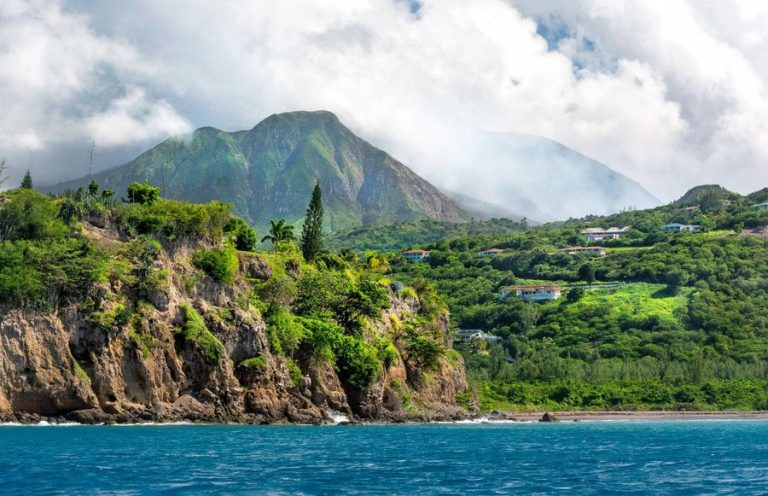
10 August, 2026The eastern Caribbean is often flattened, in the imagination of the outside world, into a single beach. It is a disservice that any traveller who has spent a week on these islands learns to resent quickly, because the chain is not one culture but dozens, stacked along a spine of volcanoes and separated by channels of water that each carry a different accent, a different drum pattern, a different idea of a good night out. Take two of them, St Kitts and Dominica, close enough to see one from the other on a clear day, and you find two entirely distinct musical and cultural souls sharing the same geology.
Both were born of fire, their peaks the tips of a submerged mountain range. Both were fought over by European powers who left behind fortresses, plantation ruins and a Creole inheritance that the islands have since turned into something wholly their own. But listen closely, and they could not sound more different.
St Kitts: sugar, string bands and the roar of Sugar Mas
St Kitts wears its history in its rhythm. This was a sugar island, one of the most profitable in the empire at its peak, and the memory of the plantation and its abolition runs through the island’s signature celebration, the National Carnival known affectionately as Sugar Mas, which unfolds across the turn of the year rather than before Lent.
The soundtrack is a particular Kittitian blend. The old string bands, all guitar, ukulele, and the scrape of the guiro, still play the quadrilles and the calypsos that carried the island through the twentieth century, while soca and the thunder of the road march now dominate the parade. There is a specific joy in watching a St Kitts string band, a form that elsewhere in the Caribbean has faded, held onto here as living music rather than heritage in a glass case.
Preserving that kind of intangible culture is not free, and small islands have to be inventive about paying for it. St Kitts, the first of the Caribbean nations to try the model back in 1984, funds a good deal of its heritage and infrastructure through the island’s long-running investment-citizenship programme, which is why the Carnival village and the restored Brimstone Hill fortress look better cared for than the island’s size alone would suggest. Then the music takes over again, and the economics recede into the background where they belong.
Dominica: the Nature Island’s Creole heartbeat
Sail south to Dominica and the entire register changes. This is not a sugar island; its mountains were too steep, its rainforest too dense, and that same wildness that defeated the planters is exactly what defines it today. They call it the Nature Island, and the name is earned the moment you step off the plane into air that smells of wet green.
Dominica’s music grew out of that landscape and its deep Creole roots. This is the home of cadence-lypso, the style that the legendary band Exile One helped export across the francophone Caribbean in the 1970s, and of its raucous descendant bouyon, all pounding drum-machine and call-and-response that fills the island every year at the World Creole Music Festival. Where St Kitts feels Anglophone and brass-forward, Dominica pulses with a French Creole heartbeat, closer in spirit to Guadeloupe and Martinique on either side of it than to its northern neighbour.
The island’s relationship with its own nature is unusually deliberate. After Hurricane Maria flattened it in 2017, Dominica declared its intention to become the world’s first climate-resilient nation, and that ambition shapes everything from how it rebuilds villages to how it runs its festivals.
Further reading: for anyone curious how a small island funds a project that large, this overview of the citizenship programme that helps pay for that resilience lays out the mechanics.
Two hikes, two ways of understanding an island
The best way to feel the difference between these islands is on foot. On St Kitts, the walk that stays with you is the scramble up the dormant volcano, Mount Liamuiga, through old estate land where the ghosts of the sugar economy are never far, ending at a crater rim wrapped in cloud forest. It is a hike through history as much as nature.
On Dominica, the equivalent is the punishing trek to Boiling Lake, a flooded fumarole steaming at the end of a day through the aptly named Valley of Desolation, or a segment of the Waitukubuli National Trail, the first long-distance footpath in the Caribbean. Here the walk is not through history but through raw, active geology, the island still visibly making itself.
Both hikes teach the same lesson from opposite directions: these are not passive beach destinations but places with steep interiors, deep stories and a fierce sense of themselves.
The Caribbean the cruise ships miss
What St Kitts and Dominica share, beyond their volcanic bones, is a refusal to be reduced to a swim-up bar. Their culture is not staged for the day-tripper; it happens on its own calendar, at Sugar Mas and the Creole Music Festival, in string-band rehearsals and village drum sessions that no cruise itinerary will ever reach. To catch it you have to arrive on the island’s terms, stay past the afternoon, and let the place set the tempo.
That, in the end, is the argument for the wider eastern Caribbean over the single imagined beach. Two islands you could see from one another turn out to be two different worlds, one Anglophone and brass-bright, one French Creole and green to its bones, each guarding a musical identity that took centuries to build. The sea between them looks narrow. The distance in sound and spirit is enormous, and travelling it slowly is the whole reward.
Follow Sounds and Colours: Facebook / Twitter / Instagram / Mixcloud / Soundcloud / Bandcamp
Subscribe to the Sounds and Colours Newsletter for regular updates, news and competitions bringing the best of Latin American culture direct to your Inbox.