


Virtual Favelas and Global Servers: Forging Brazilian Identity in International MMORPGs
09 June, 2026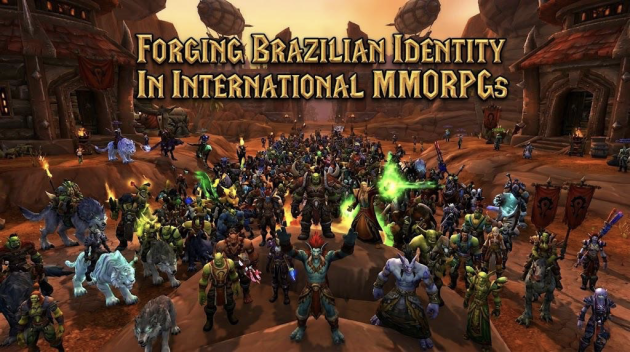
Brazil is the largest gaming market in Latin America and, by most estimates, holds the fifth-largest online player base in the world: roughly 103 million people who log in, grind, raid, and occasionally yell in Portuguese at unsuspecting strangers on English-speaking servers. That number is not a coincidence. It reflects something deeper than broadband penetration or smartphone affordability. For millions of Brazilians, international MMORPGs: and World of Warcraft in particular: have become unexpected arenas for identity formation, community building, and cultural expression. If you have ever wondered why the best WoW boost by Boostmatch platforms see so much demand from Brazilian players pushing through endgame content in a language that is not their own, the answer is tied to something that goes far beyond gear scores.
To understand how Brazilians navigate international MMORPGs, it helps to understand what the internet looks like from a favela. Digital inequality in Brazil is not subtle: around 43% of favela residents have limited or no access to mobile internet, and even those who do often rely on 3G connections or shared cybercafé terminals at roughly $0.40 per hour. Despite this, gaming took root. When FIFA and League of Legends began transforming casual players into esports professionals, kids in Rio and São Paulo were watching from cybercafé screens, saving up for their hour at the keyboard, and finding something in those virtual worlds that the physical world was not offering: agency, progression, and community on equal terms.
The Brasilidade Problem in Game Worlds
Mainstream video games have historically done a poor job representing Brazil. Academic research published in the Springer encyclopedia of gaming notes that Brazilian settings in games default to two templates: the exotic Amazon (complete with electric-green monsters) or the favela-as-shooting-gallery, built on stereotypes of lawlessness. Brazilian characters, when they appear at all, are constructed almost entirely from hypersexualised women and football-obsessed men. This is the concept of Brasilidade: “Brazilian-ness”: reduced to a handful of lazy clichés.
MMORPGs sidestep this problem by accident. In World of Warcraft, there are no Brazilians. There are Night Elves, Orcs, and Paladins. The virtual world of Azeroth is culturally neutral territory, and that neutrality turns out to be quietly liberating for players whose real-world representation elsewhere is either absent or embarrassing. Inside Azeroth, Brazilian players are not the exotic other: they are just raiders with opinions about talent builds.
Common stereotypes applied to Brazil in mainstream games include:
- Favelas depicted as combat arenas stripped of their social or cultural context.
- Brazilian characters defined entirely by football enthusiasm or hypersexualisation.
- Indigenous or Amazonian characters reduced to fantastical monster archetypes.
- An almost total absence of ordinary middle-class or urban Brazilian experience.
From Thalnos to Sul’thraze: The Server Question
The server history of Brazilian WoW players is a minor epic in itself. When World of Warcraft Classic launched in 2019, there were no dedicated Brazilian realms. Brazilian players organised themselves on Thalnos, an unofficial gathering point that became so recognisably Brazilian that it was jokingly renamed “BRnos” in community forums. A month after launch, Blizzard opened Sul’thraze: the first official Brazilian Portuguese realm: but the rollout was messy. The server launched weeks late, was not physically hosted in Brazil (players still faced 150–200ms ping), and the top Brazilian guilds largely refused to migrate, unwilling to abandon the community they had already built.
The Sul’thraze episode illustrates something important about how Brazilian WoW communities function. They do not simply follow official infrastructure. They build their own, organically, around language and shared experience. A guild is not just a raiding organisation; according to Wowpedia, guilds exist to make grouping and raiding easier while forming “a social atmosphere in which to enjoy the game.” For Brazilian players on foreign servers, that social atmosphere carries an extra layer of weight: it is often the primary Portuguese-speaking community they have access to in the game.
Key moments in the Brazilian WoW server history:
| Year | Event | Community response |
|---|---|---|
| 2004–2005 | Early Brazilian guilds form on North American servers | Portuguese-language micro-communities emerge within EN guilds |
| 2019 (Aug) | WoW Classic launches with no BR server; Thalnos becomes unofficial BR realm | Self-organised community migration before any official action |
| 2019 (Sep) | Blizzard opens Sul’thraze, the first official Brazilian Portuguese realm | Top BR guilds refuse to move; server launches under-populated and physically abroad |
| 2024–2025 | Ongoing Blizzard forum requests for a server physically hosted in Brazil | Community continues playing at 150–200ms; demand unresolved |
Identity Under Latency
Playing an international MMORPG at 150ms is not just an inconvenience: it is a metaphor. Brazilian players in Azeroth are perpetually operating at a slight disadvantage imposed by geography and infrastructure, and they do so anyway, in large numbers, because what they get in return matters enough. Research into the Brazilian WoW context, published in the Brazilian Administration Review, found that the motivations driving players most strongly were the search for social relationships and a form of escapism that allows immersion in an “ideal reality”: a space for building a self that is not constrained by real-world circumstances.
That research tracks with what is happening on the ground. Brazil’s RPG and MMORPG genre ranks second only to action-adventure in popularity, with approximately 51.2% of Brazilian gamers identifying it as a favourite genre in 2024. This is not a casual relationship with the format. Brazilian players invest deeply, form tight-knit guild communities that in some cases substitute for real-world social networks, and bring recognisable cultural patterns into virtual spaces: the warmth, the group loyalty, the chaos, the occasional war cry in Portuguese over voice chat.
Reasons Brazilian players gravitate toward MMORPGs over other genres:
- The genre’s persistent social structures replicate and sometimes replace real-world community bonds.
- Character progression offers a meritocratic arc that can feel absent in economically unequal environments.
- Guild systems create a space for Portuguese-language community even on foreign servers.
The Esports Pipeline and the Favela Connection
The story of Brazilian gaming identity is inseparable from the story of digital inequality. AfroGames, often cited as the world’s first favela-based esports collective, was founded in part because the upper tiers of Brazilian competitive gaming contained almost no Black players and virtually none from favela backgrounds: despite the fact that gaming itself had deep roots in those communities. The cybercafé was the great democratiser: $0.40 an hour bought access to the same Azeroth that a player in Chicago or Seoul was exploring.
This matters for how we read Brazilian presence in international MMORPGs. These players are not simply consumers of a foreign product. They are participants building something: guilds, community norms, reputations, friendships: in a space that, unlike most spaces they navigate, does not start with a structural disadvantage baked in. The ping is 150ms. Everything else is earned.
What Brazilian gaming communities have built within international MMO spaces:
- Self-organised realm communities that predate and outlast official server infrastructure.
- Portuguese-language guild networks that function as genuine social support structures.
- A distinct raid culture that combines high achievement motivation with tight group cohesion.
- Cross-class mentorship patterns that echo the social solidarity found in favela communities.
The Market Reality: Brazil at Scale
None of this happens in a vacuum. Brazil’s gaming market was valued at approximately $2.47 billion in 2024 and is expected to approach $5 billion by 2030, growing at close to 10% annually. The country’s ARPU (average revenue per user) remains lower than the global average, meaning Brazilian players generate outsized engagement relative to their monetisation: a pattern that publishers are slowly beginning to address with regional pricing, Portuguese-language localisation, and PIX integration for in-game payments.
The structural demand that drives Brazilian players toward boosting services, progression assistance, and community-built advancement tools is real and documented. When you are playing at 150–200ms latency, have spent your session grind time in a cybercafé, and are trying to maintain a raid team across a community that spans wildly unequal real-world circumstances, every hour in Azeroth has a different weight than it does for a player with fibre broadband in a suburb. The shortcuts are not laziness. They are resource allocation.
Structural factors shaping Brazilian player behaviour in international MMORPGs:
- Persistent 150–200ms latency on servers not physically located in Brazil creates a mechanical disadvantage in time-sensitive content.
- Uneven internet access means that playtime is often finite and high-cost, raising the value of efficient progression.
- Brazil’s low gaming ARPU relative to engagement reflects a monetisation gap that the market is only beginning to close.
- Regional economic inequality means that a player’s available hours and resources vary enormously within the same national community.
Conclusion
Brazilian identity in international MMORPGs is not something that was designed in. Blizzard did not plan for Thalnos to become a de facto Brazilian server, or for Sul’thraze to be rejected by the very community it was built to serve, or for Portuguese war cries to become a recognisable feature of WoW Classic’s early years. It happened because Brazilian players: 103 million of them, from cybercafés in Rio to gaming setups in Belo Horizonte: found something worth showing up for, and showed up anyway, lag and all.
The virtual favela, if we want to use that frame, is not a ghetto. It is an enclave built by choice, defined by language and loyalty and an irrepressible tendency to out-organise the infrastructure that was supposed to contain it. That is a cultural story worth telling: one that starts at a cybercafé terminal and ends somewhere in the middle of a 25-player raid, at 180ms, winning anyway.
Follow Sounds and Colours: Facebook / Twitter / Instagram / Mixcloud / Soundcloud / Bandcamp
Subscribe to the Sounds and Colours Newsletter for regular updates, news and competitions bringing the best of Latin American culture direct to your Inbox.