

Why Road Trips Reveal a Side of Latin America You Can’t See From a Plane
14 August, 2026Flying makes Latin America remarkably accessible. A traveler can leave one major city in the morning and arrive hundreds or thousands of miles away before lunch. What disappears in the process, however, is everything between those two points.
That space between destinations is particularly important across Latin America. Landscapes can change dramatically within a relatively short distance, while regional food, architecture, agriculture, music, and daily routines often make more sense when experienced gradually. A road trip turns the journey itself into part of the destination.
You Watch the Landscape Change Instead of Suddenly Arriving
Flying presents geography as a series of disconnected scenes. There is one landscape outside the airport when you leave and another when you arrive.
Driving shows the transition.
Mountain roads can climb from hot valleys into cool highlands. Dense vegetation may gradually give way to dry plains, vineyards, desert, or coastline. In parts of the Andes, changes in altitude can transform the scenery surprisingly quickly. Long-distance routes through Argentina, Chile, Brazil, Colombia, Mexico, and Central America reveal similar contrasts on very different scales.
These transitions provide context that photographs from an airplane window cannot. You begin to understand how cities relate to mountains, why agricultural regions developed where they did, and just how isolated certain communities are from major urban centers.
Small Towns Stop Being Names on a Map
Air travel naturally concentrates attention on places large enough to support major airports. Road travel does almost the opposite.
A town that would never justify a dedicated trip can become the place where you stop for coffee. A roadside restaurant serves lunch. A market appears unexpectedly. A viewpoint that barely registers on a map becomes one of the most memorable stops of the journey.
These places provide a different perspective on a country from its major tourism centers. Capital cities and famous resorts inevitably receive enormous amounts of outside influence. Smaller communities often move at a different pace and reveal regional differences that become difficult to appreciate when traveling exclusively between major destinations.
Roadside Food Becomes Part of the Experience
Latin American food cannot be reduced to the dishes served in famous restaurants or tourist districts. Traveling overland makes that obvious very quickly.
Roads pass bakeries, fruit stands, family restaurants, markets, food stalls, service stations, and regional establishments catering largely to people who actually travel that route. What appears on the menu can change as the landscape changes.
A road journey through a coffee-producing region may pass directly through the farms behind the drink. Coastal roads reveal where seafood traditions come from. Agricultural areas make regional ingredients visible long before they appear on a plate.
Even an unplanned stop can become memorable because it connects food to a specific place rather than treating cuisine as something encountered only after arriving at a destination.
The Vehicle Starts Telling the Story of the Journey
A long road trip also has a physical side that flying largely removes from travel.
Vehicles collect evidence of where they have been. Dust settles across the bodywork after dry roads, insects cover the front after long highway stretches, coastal air leaves its mark, and muddy rural sections can transform a clean vehicle within minutes. After particularly demanding journeys, transport operators and commercial fleets may require substantially heavier cleaning than an ordinary car wash can provide; equipment designed for those transportation environments can be seen at https://hotsyhouston.com/industries/pressure-washer-transportation/.
For an individual road trip, that layer of dust may simply be part of the adventure. It is a reminder that the journey happened at ground level rather than several kilometers above it.
You Notice How People Actually Move Around
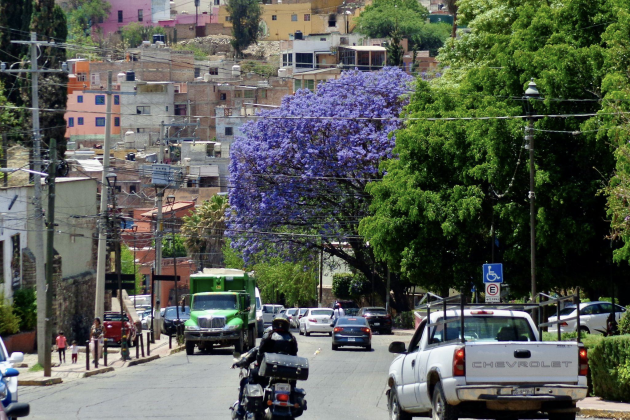
Airports can create a distorted impression of transportation. They show how visitors and long-distance passengers move between major destinations, but not necessarily how everyday regional travel works.
On the road, another transportation network becomes visible.
Intercity buses connect towns. Motorcycles dominate certain areas. Trucks carry agricultural products toward cities and ports. Local vans serve communities away from major highways. Roadside businesses appear wherever drivers regularly need fuel, repairs, food, or rest.
You also begin noticing how infrastructure affects daily life. A smooth highway can make neighboring cities feel closely connected, while difficult mountain roads can make two geographically nearby communities feel surprisingly distant.
Borders Feel Much More Real on the Ground
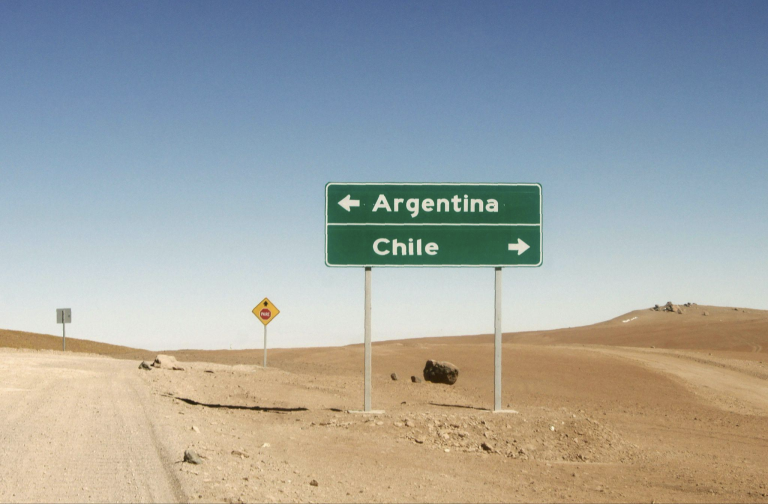
Flying internationally can make crossing a border feel almost abstract. Passengers leave one airport, complete the necessary formalities, and emerge in another country.
Overland crossings make geography harder to ignore.
Traffic changes. Road markings may look different. Currency, signs, license plates, architecture, and roadside businesses begin to shift. Sometimes the change is immediate; elsewhere, cultural similarities continue well beyond the political boundary.
This is especially interesting in regions where neighboring countries share landscapes, indigenous histories, foods, musical traditions, or commercial relationships. A map shows a precise line. Traveling through the area reveals that cultural boundaries are rarely quite so tidy.
Getting There Becomes Part of the Memory
Flying is extremely useful when time matters or distances are enormous. Latin America is far too large to pretend that every journey should be made by road.
But speed changes the nature of travel.
A flight encourages thinking in destinations: Mexico City, Cartagena, Buenos Aires, Santiago, Lima, Rio de Janeiro. A road trip adds hundreds of smaller experiences between those recognizable names.
There is the roadside meal that was supposed to take ten minutes, the mountain town added at the last moment, the landscape that made everyone stop talking, the wrong turn that unexpectedly worked out, and the stretch of road that seemed endless while it was happening but becomes part of the story afterward.
A plane can show just how enormous Latin America is. Traveling its roads reveals something different: what exists in all that space.
Follow Sounds and Colours: Facebook / Twitter / Instagram / Mixcloud / Soundcloud / Bandcamp
Subscribe to the Sounds and Colours Newsletter for regular updates, news and competitions bringing the best of Latin American culture direct to your Inbox.