

How Colombia Built a Music Scene Around Giant Speakers
06 October, 2026In Cartagena and Barranquilla, you could tell which sound system had arrived before you heard the music.
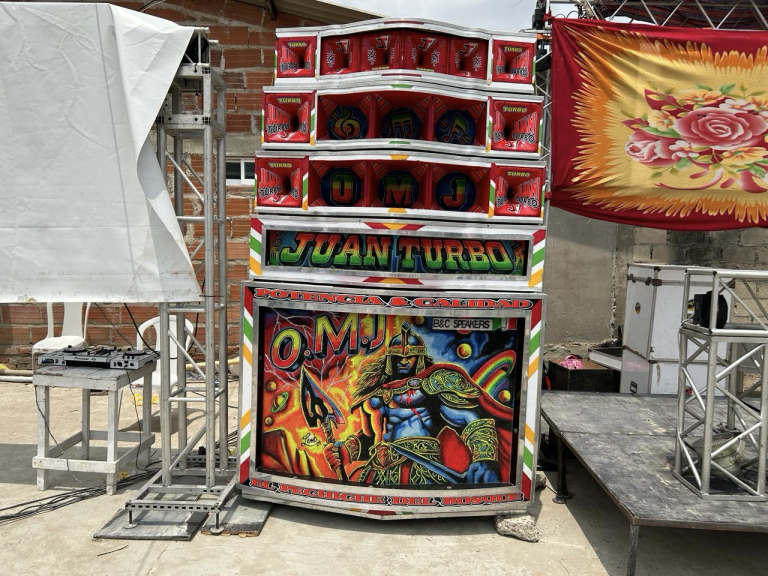
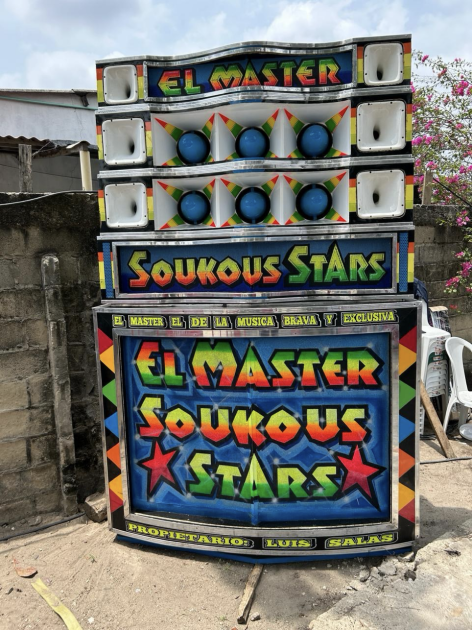
A picó might stand several feet high, its wooden cabinets covered in airbrushed dragons, African figures, musicians, mythical creatures, or enormous lettering announcing its name.
Then the bass would start, and an entire neighborhood would know which machine was playing.
The picó developed along Colombia’s Caribbean coast during the mid-20th century as a powerful sound system for neighborhood parties. By the 1970s, it had become part of a much larger musical ecosystem.
Owners competed for rare records, DJs developed reputations around their selections, artists painted elaborate speaker cabinets, and audiences began following particular picós as closely as people follow bands.
The interesting part is how much of this culture developed around one problem: how do you build a music scene when the music you want is coming from thousands of miles away?
The African Records That Changed Cartagena
Colombia’s Caribbean ports were connected to international trade, which also allowed foreign music to reach local neighborhoods.
During the 1960s and 1970s, African records began circulating through Cartagena and Barranquilla through sailors, merchants, travelers, and personal connections.
The records did not arrive through a neat distribution network. A DJ might receive one from someone working for an airline. Another might hear about a particular African track through a relative or another picotero.
One famous story involves El Conde, one of Cartagena’s early African-music picós, receiving a copy of “El Mambote” by Congolese Orchestre Verve. The track became an immediate sensation.
Scarcity created competition.
If one picó had a record nobody else could identify, that record could become its weapon.
DJs scratched labels off vinyl, invented Spanish names for songs, and sometimes deliberately misidentified tracks so competing sound systems could not find them.
One El Conde track reportedly became known locally as “My Grandfather’s Pyjamas” because nobody knew its original title.
Back then, not knowing a record’s identity was precisely what made it valuable.
The picó became part of the distribution system itself. It was where people discovered music, where DJs tested unfamiliar sounds, and where songs could acquire completely different local identities.
African genres such as soukous, highlife, and mbaqanga circulated alongside salsa, Cuban music, reggae, and other Caribbean sounds.
Local musicians eventually absorbed these influences into their own work, contributing to the development of champeta.
Researchers describe this as an exchange involving music, technology, people, and physical objects rather than a simple case of one genre influencing another.
The result was a remarkably Caribbean chain of exchange: African records reached Colombian ports, Afro-Colombian communities embraced them, and musicians eventually transformed those influences into something distinctly local.
From Jamaican Sound Systems to Colombian Picós
The obvious comparison is Jamaica.
Jamaican sound systems had already demonstrated how speakers, selectors, DJs, and competitive music collecting could become the foundation of an entire culture.
The beautiful mix of the two cultures helped produce ska, rocksteady, reggae, and eventually dancehall.
Colombia developed something remarkably similar around the picó. Both traditions relied on enormous sound systems, charismatic DJs, rare recordings, competition, and crowds that treated the sound system itself as an attraction.
Researchers have specifically compared the social role of Colombian picós with Jamaica’s sound-system tradition.
But the Colombian version developed its own character.
Jamaican sound-system culture became closely associated with locally produced Jamaican music. Colombian picós became famous for hunting down music from elsewhere and turning it into local property.
The DJ’s skill involved knowing what would move a Colombian crowd, even when the original artist might have been singing in a language the audience did not understand.
People rarely receive an outside influence intact. They take what works, adapt it to local tastes, and eventually create something that feels native.
Champeta demonstrates this particularly well. Its African and Caribbean influences are obvious, but its history is rooted in Afro-Colombian communities and the social conditions of Colombia’s Caribbean coast.
It became hugely popular there while facing resistance elsewhere in Colombia because of its Black identity, working-class associations, and connection to loud neighborhood parties.
What Other Countries Can Learn From the Picó
A picó party works because the sound system, DJ, artwork, music, and crowd all belong to the same cultural experience.
Walk into one of these Caribbean fiestas, and the atmosphere has more in common with a neighborhood carnival than a conventional concert.
The speaker cabinets tower over the crowd, the DJ controls the flow, people gather around the machine, and the visual spectacle becomes part of the attraction.
In a Filipino context, you might compare that mixture of music, spectacle, and communal entertainment to the atmosphere surrounding a color game perya; only here, the giant painted speaker is the centerpiece.
Colombia’s picoteros did not wait for major labels to decide which African records Colombian audiences should hear. They found music through informal networks, brought it into neighborhoods, competed over it, and built communities around it.
Other countries developed similar systems. Mexico has its sonideros, Brazil has its enormous aparelhagens in Pará, and Jamaica has its sound-system tradition. Each took imported technologies or musical influences and adapted them to local audiences.
A music scene does not always need a major industry behind it. Sometimes it needs a few people willing to find interesting music, build something loud enough for everyone to hear, and give the neighborhood a reason to gather around it.
A record crossed the Atlantic. A DJ found it. A picó blasted it into a street. Someone danced, another musician borrowed the rhythm, and eventually an entire musical identity grew around the noise.
Follow Sounds and Colours: Facebook / Twitter / Instagram / Mixcloud / Soundcloud / Bandcamp
Subscribe to the Sounds and Colours Newsletter for regular updates, news and competitions bringing the best of Latin American culture direct to your Inbox.