

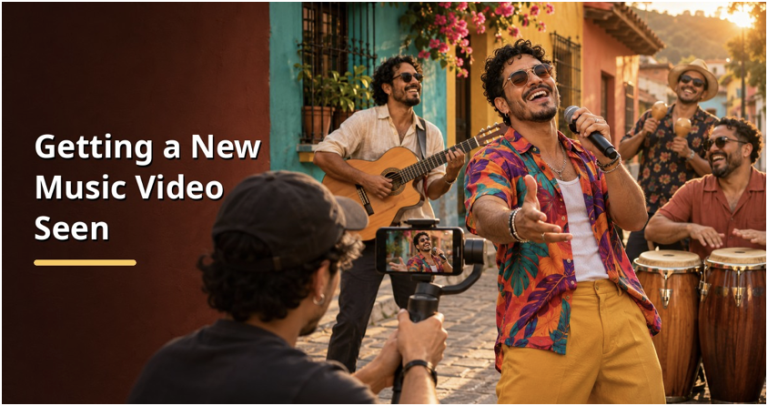
How Latin American Musicians Get a New Music Video Seen
16 November, 2026Getting a new music video seen means planning its first days as carefully as the shoot. Phones and AI tools have made video cheap to produce, so the hard part has moved. Artists from Bogotá to São Paulo compete for the first hours of attention, and that window decides how far a clip travels.
What Does Distribution Mean for a Music Video?
Distribution is everything that puts a finished video in front of listeners after you press publish. It covers the platform’s recommendations, the artist’s social accounts, playlists, press, fan groups and any paid push. Production ends on upload day. Distribution starts there and keeps going for weeks.
For a long time the balance ran the other way. A cumbia band or a reggaeton newcomer needed a director, a crew and a budget just to have something to post. Today a phone and a free editor can produce a clip that looks finished, and thousands of other clips land on the same day as yours.
Cheap to Make, Hard to Get Watched
The tools got easier, but the attention available to each clip shrank. When anyone can publish, the scarce resource is the first wave of viewers who decide whether a clip keeps moving.
A God of Prompt essay on how video got cheap while reach got expensive explains the mechanics. It says YouTube still shows a new upload to a small group first and reads what they do. A cold channel that publishes thirty videos a month fails that test thirty times rather than once. The creators getting results from AI tools, the essay notes, tend to publish less than they could and test ideas privately first.
The same piece suggests watching the first three seconds without sound. Many people scroll with the volume down, so a video that opens on a black screen and a slow fade loses them before the first note. Open on movement, a face or a caption that names the song.
How Should an Artist Plan the First Week of a Release?
Give every day after release one clear job. The table below is a simple version an independent artist can adapt.
| Day | Main job | What to post |
| Before release | Build anticipation | Teaser clip, cover art, premiere reminder |
| Day 1 | Gather the first audience | Full video, link in every profile, note to the mailing list |
| Days 2 and 3 | Keep the momentum | Short vertical cuts of the hook, a lyric line on screen |
| Days 4 and 5 | Add context | Behind-the-scenes footage, the story of the song |
| Days 6 and 7 | Thank and invite | Fan reposts, a live performance clip, the next show date |
Each piece should send people back to the main video, so the views, likes and comments gather in one place instead of scattering.
Where Social Growth Services Fit In
The empty-room stage of a new account or a new release is where growth services help. A video with a handful of views can look unfinished to a first-time visitor, even when the song is strong. A visible starting audience makes that visitor more likely to press play.
Wpglob’s ranked list of six social growth platforms compares these providers and names what to check before choosing one: gradual delivery, a refill window and, if you run several platforms, how many networks a service covers. One service on the list also covers Spotify and other music and streaming networks, which helps artists who release on more than YouTube.
The list also advises starting small and scaling up. Starting with one single and scaling up for the next release fits a musician’s calendar.
One Shoot, a Month of Posts
Filming several videos on the same day, known as batching, turns a single shoot into weeks of content. Fashion Bomb Daily’s story on stylists turning YouTube into their own brand, which points to stylists such as Law Roach and Karla Welch, says many successful creators work this way and keep a lean team for editing. A band can do the same on video day, and use the extra clips to show how the song was written and what the lyrics mean.
Plan the extra footage before the cameras roll:
- A 30-second vertical cut of the chorus for Shorts, Reels and TikTok.
- An acoustic take of the song in the same location.
- A short interview about where the song came from.
- Outfit and set details for a photo carousel.
- A rehearsal clip that shows the band before the final take.
Each one costs little once the crew and the location are in place, and together they keep the channel active between singles.
Frequently Asked Questions
When can you judge how a new music video is doing?
Give it at least the first week of planned promotion. Early numbers move a lot, and a video that starts slowly can pick up once short clips and fan reposts point back to it.
Should an independent artist post a video every day?
No. A steady rhythm of strong uploads, backed by short clips, usually does more than a high volume of rushed ones.
Do growth services replace promotion?
No. They give a release a visible start, while the music, the visuals and the first-week plan keep listeners coming back.
A cheaper camera has moved the work from the shoot to the days after it. Artists who plan those days give each release a fairer shot at being heard.
Follow Sounds and Colours: Facebook / Twitter / Instagram / Mixcloud / Soundcloud / Bandcamp
Subscribe to the Sounds and Colours Newsletter for regular updates, news and competitions bringing the best of Latin American culture direct to your Inbox.