

Songs You Can See: How Latin American Artists Build a Visual World Around Their Music
14 September, 2026Think of a song you love from somewhere in Latin America. There is a good chance you can also picture something: a colour, a room, a street, a dancer, a face. Music tends to arrive with images attached. Sometimes they come from a video. Sometimes from an album sleeve, a poster taped to a wall, or one photograph sitting next to the track online.
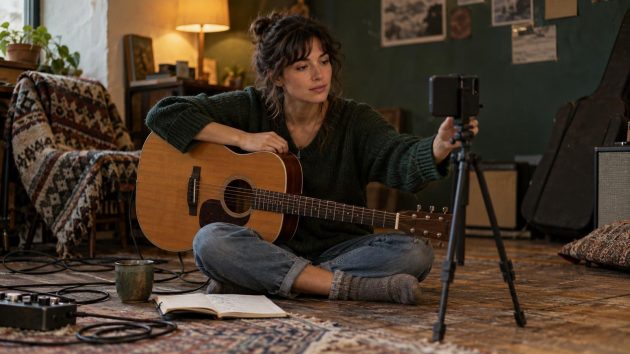
Those pictures rarely appear by accident, and they rarely arrive with a large budget. Many artists build their visual world the same way they build a record: slowly, with whatever is close to hand. Some shoot on a phone in a friend’s kitchen. Others sketch the idea first, and a rough test clip made with an ai video maker can show a colour palette or a camera move before anyone books a location. The tools keep changing. The question underneath them does not: how do you show people what a song feels like?
This article is about that question. Not about gear, but about the choices behind the pictures — where the ideas come from, why a strong visual can change the way a song is heard, and how artists working with very little still manage to stay in the memory.
The picture came with the movement
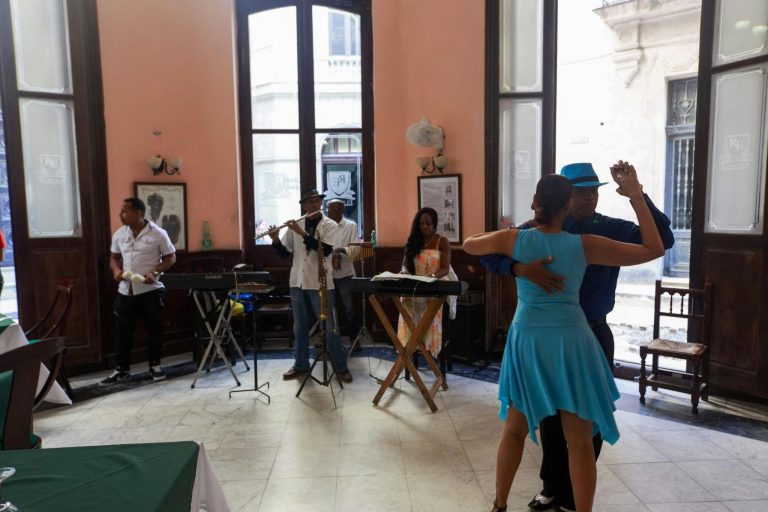
Across the region, music and images have travelled together for a long time. Record sleeves in the 1960s and 1970s carried painted lettering, photo collage and blocks of strong colour. Tropicália in Brazil treated the cover, the clothing and the stage as part of the work rather than as packaging around it. Cumbia moved through towns on hand-painted dance posters. Sound systems on Colombia’s Caribbean coast were known by the names and designs painted across their speaker stacks. Groups drawing on Andean music put textiles and mountain photography on their sleeves.
Posters and murals did similar work out on the street. A painted wall could announce a dance, name the band and set its mood in a single glance, long before anyone in the neighbourhood had heard a note.
Little of this was marketing in the way we use the word now. It was a way of saying where the music came from and who it was for. A sleeve could tell you whether a record belonged to a city, a coastline, a village or a protest. That habit never stopped. It moved onto screens.
What the eye does to the ear
It is tempting to treat visuals as decoration: pleasant, but secondary to the sound. Research suggests they do more work than that.
A study published in the Proceedings of the National Academy of Sciences in 2013, by Chia-Jung Tsay of University College London, asked people to identify the winners of classical music competitions. Some participants heard only the audio recordings. Others watched only silent video of the same performances. The people who watched without sound picked the real winners more often than the people who listened. That pattern held for trained professional musicians as well as for participants with little or no musical training.
It was a narrow task, and it does not mean sound stopped mattering. Few people keep returning to an album because of its sleeve. But the finding points at something musicians often suspect: what an audience sees feeds into what it thinks it hears, even when those listeners are experts who believe they are judging the playing alone.
For an independent artist, that is practical information rather than a curiosity. A photograph or an opening frame usually reaches a listener before the chorus does.
Small budgets, strong ideas
If that is true, the useful question is not how to make a video look expensive. It is which single image people will keep.
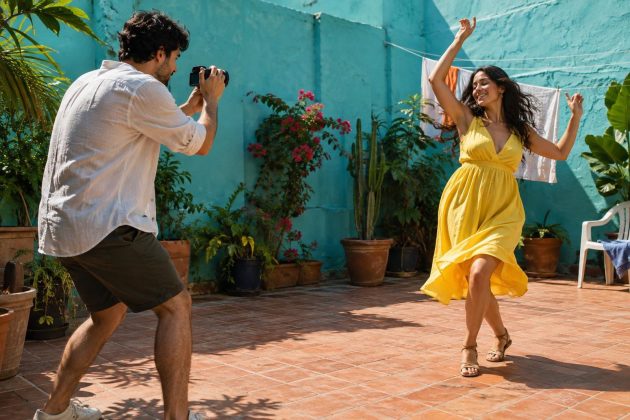
The videos that survive on almost no money tend to share a few habits. They use one location properly instead of five badly. They commit to one colour, or to one kind of light. They give a person something simple to repeat: a walk, a dance step, a gesture, a long look into the lens. They shoot at the hour when the light does half the work.
Family archives help for a similar reason. A box of photographs, a wedding tape, a few holiday clips — all of it carries a texture nobody can buy. So does dancing. A body moving in time with the music explains the music faster than any set.
The weakest low-budget videos are usually the ones imitating expensive ones. A thin copy of a big idea looks poor. A complete version of a small idea looks deliberate. Audiences forgive a cheap camera far more easily than they forgive an idea that was never really there.
It is worth thinking about the one frame that will travel on its own, too. A single still gets pulled out for a listing, a poster or a preview image. If that frame says nothing, everything else has to work harder than it should. That same frame often ends up in the physical world too, printed for a merch table, a release party or a small exhibition, and services like https://www.printmoz.com/ mount photos on lightweight foam board so a single still can stand on an easel without a frame.
Where the ideas come from
The strongest visual choices usually come from things the artist already knows. A grandmother’s kitchen. A procession. Carnival costume. A football terrace. The colours of a bus, a market stall, a hand-painted shopfront. The grain and slow pacing of old telenovelas.
Small details do much of this work. A tiled floor, a stacked plastic chair, a particular shade of green on a doorframe: these place a scene without anybody having to name the country.
References borrowed from abroad can work, but they flatten quickly, because they carry somebody else’s memories. There is a simple test. If a person from your own neighbourhood watched ten seconds of this with the sound off, would they recognise anything in it?
That question also helps artists who play abroad. An audience in another country does not need to catch every reference. It needs to feel that the images belong to the music, and that both of them belong somewhere real. Specific beats general almost every time, even across a language barrier.

A simple way to start
For a musician with a finished track and no plan, a short exercise usually beats a long conversation.
- Write down the first three images that come to mind when you hear the song, and do not explain them.
- Choose one colour and keep it everywhere.
- Find one action a person can repeat on camera.
- Make a rough test before committing money, a crew or a favour.
- Show that test to somebody who has not heard the song, with the sound off, and ask what they think it is about.
If their answer is close to yours, the images are doing their job. If it is far away, you have learnt that cheaply, and you still have the budget.
None of this needs a studio. It needs a decision about what the song looks like, taken as carefully as the decisions about how it sounds.
For a lot of listeners, the image is the first thing they meet and the last thing they forget. That makes it worth choosing yourself.
Follow Sounds and Colours: Facebook / Twitter / Instagram / Mixcloud / Soundcloud / Bandcamp
Subscribe to the Sounds and Colours Newsletter for regular updates, news and competitions bringing the best of Latin American culture direct to your Inbox.