

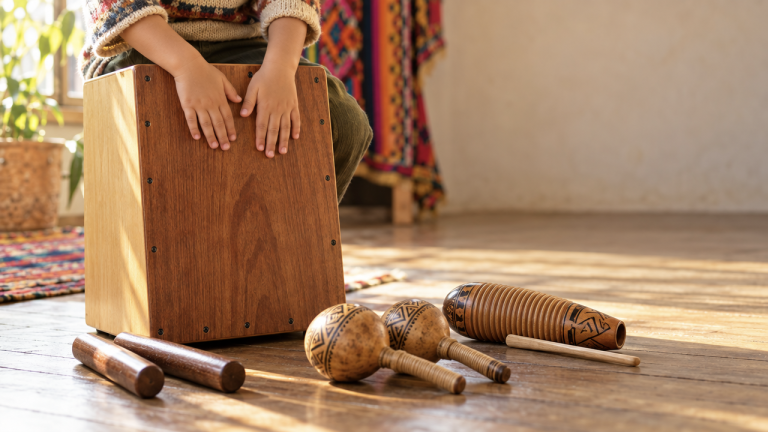
Why Afro-Latin Rhythm Makes the Perfect First Music Lesson for Kids
25 November, 2026This August, Peru marked 25 years since it named the cajón part of the nation’s cultural heritage. That’s a fitting honor for a wooden box drum that grew out of Afro-Peruvian communities and is now heard on stages around the world. It also points to something parents sometimes miss. Long before a child is ready for piano keys or guitar chords, they are ready for rhythm.
Across Latin America and the Caribbean, many children meet music this way. They clap a pattern, shake a gourd, or answer a singer’s call. These traditions happen to line up closely with what researchers now say young children need most.
Why Rhythm Comes First
Researchers at Northwestern University have spent years studying how young children keep a beat. In a 2014 study, preschoolers who could match a steady beat showed sharper brain responses to speech and scored higher on early language tests. A later study gave more than 150 children ages 3 to 5 a simple drumming task. The strongest beat keepers outscored their peers on every pre-reading measure.
The lesson is simple. Feeling a pulse is a building block for both music and language. That’s why many preschool music classes now teach rhythm, ear training and basic note reading through movement games and hands-on instrument time, all before a child commits to one instrument. The same thinking drives the Orff approach, which is used in classrooms worldwide. It moves children from imitation to exploration, then to improvisation and finally to composition.
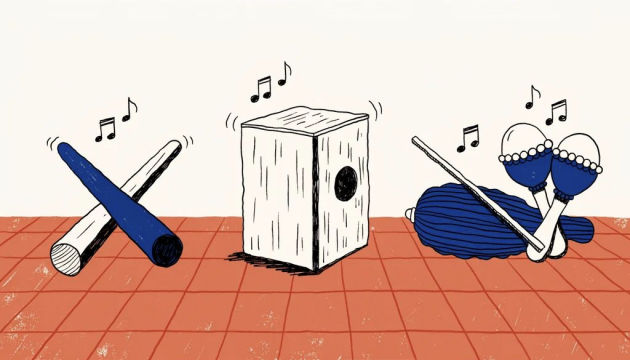
Three Instruments, Three Lessons
The Clave: Holding a Pattern
The clave is a pair of hardwood sticks, but the word also names the rhythm they play. That rhythm holds Afro-Cuban music together, and versions of it are played as bell patterns across much of Africa. Cuban son built its sound on clave, call and response, and percussion with roots in Bantu traditions.
For a four-year-old, clave is the right kind of challenge. The pattern is short and repeats, so a child can clap it, step it or say it out loud. Once a child can keep a steady pulse, holding the clave on top of that pulse is the next step.
The Cajón: Hearing High and Low
The cajón is the only Peruvian instrument the player sits on, and it drives Afro-Peruvian styles like festejo and landó. Children love it because it takes no technique to get a sound. A hit in the center gives a deep bass tone, and a slap near the edge gives a sharp crack. That contrast is an early lesson in listening to tone and volume.
Maracas and Güiro: Starting and Stopping
Maracas and the güiro are traced to Cuba’s Indigenous Taíno people. Shaking is a big, easy movement, so maracas are often the first instrument a toddler can control. The real skill comes when the music stops and the shaking has to stop with it. That moment builds listening and self-control at the same time.
Call and Response: The First Ensemble Skill
Call and response runs through Afro-Cuban, Afro-Brazilian and Afro-Peruvian music, and through countless children’s games in the region. One voice or drum offers a phrase, and the group answers. For young children, this builds the habits every musician needs. You listen before you play, you wait your turn, and you copy a pattern before you invent your own.
Bringing These Rhythms Home
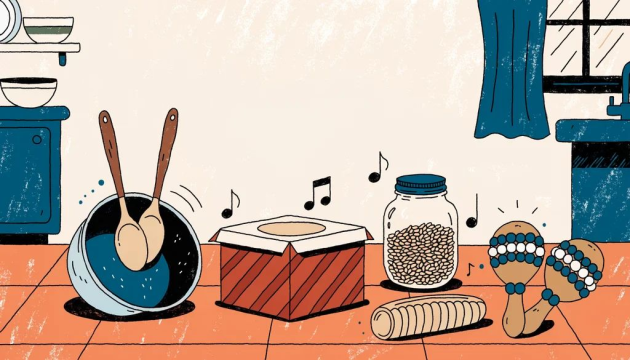
Parents don’t need any training to start. Put on a classic son recording and clap the clave along with it. Turn a sturdy cardboard box into a practice cajón and play a game of high sound, low sound. Fill a sealed container with dry rice for homemade maracas, then shake along to music and freeze when it stops.
Pots and wooden spoons are great for call and response. Drum a short phrase, let your child answer it, then switch roles. Dancing first helps too. When children move to the beat, they feel the pulse with their whole body before they try to play it.
Where Melody Begins
Peru gave a simple wooden box national honors because rhythm carries history, identity and community. For the youngest musicians, it carries something else too. Before a child learns melody or harmony, the clave can teach them to feel time, listen to others and answer back. Keys and strings can wait a little while.
Follow Sounds and Colours: Facebook / Twitter / Instagram / Mixcloud / Soundcloud / Bandcamp
Subscribe to the Sounds and Colours Newsletter for regular updates, news and competitions bringing the best of Latin American culture direct to your Inbox.